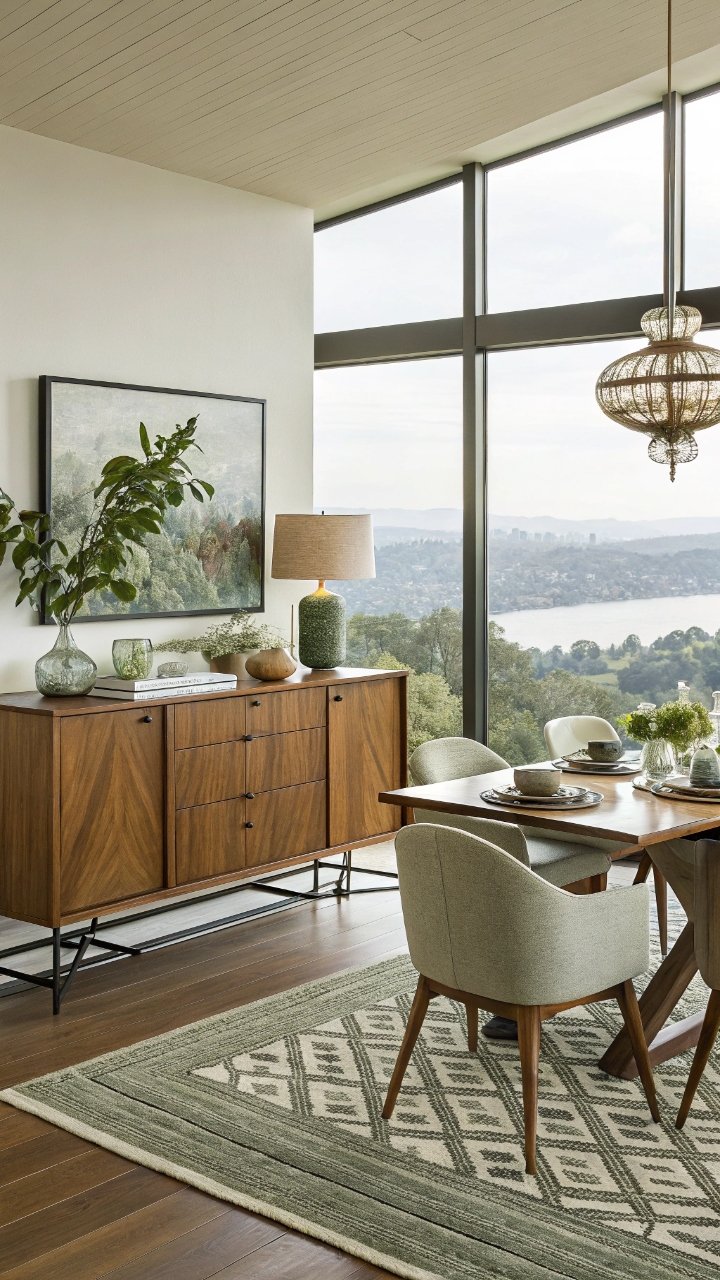
13 Mid Century Dining Room Ideas That Feel Timeless and Stylish
There are some dining rooms that look beautiful in photographs, and then there are dining rooms that people genuinely enjoy spending time in. A great dining space encourages lingering conversations, second helpings, and those unexpected moments when everyone stays seated long after the meal is over. While decorating trends constantly evolve, mid-century modern design continues to resonate because it prioritizes both appearance and experience. The rooms feel polished without becoming stiff, creating an atmosphere that welcomes everyday living as much as special occasions.
One of the reasons mid-century dining rooms remain so appealing is their emphasis on balance. They blend practicality with personality, allowing furniture and decor to feel purposeful rather than purely decorative. Instead of chasing the latest trends, the style relies on thoughtful proportions, quality craftsmanship, and design choices that age gracefully over time. This approach creates spaces that feel just as relevant today as they did decades ago.
Whether you’re updating a dining nook or redesigning an entire entertaining space, mid-century design offers plenty of inspiration. From creating a stronger focal point to improving comfort and flow, these ideas focus on different ways to make your dining room both stylish and enduring. The result is a space that feels inviting today and will continue to feel relevant for years to come.
1. Center the Room Around a Beautiful Table
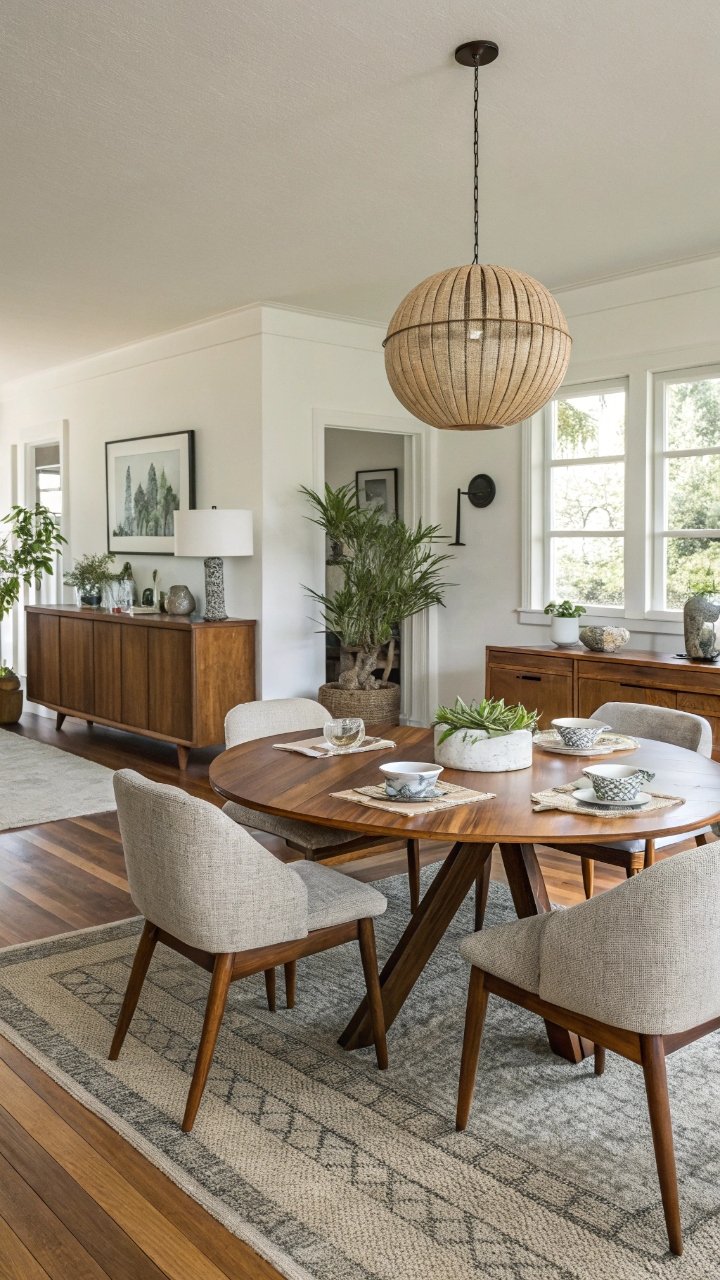
Every dining room needs a feature that naturally draws attention, and the dining table is the perfect place to start. A well-crafted mid-century table provides more than a surface for meals; it establishes the rhythm of the entire room. The proportions, shape, and finish influence how people gather and interact within the space. A thoughtfully chosen table creates structure and purpose while giving the room a sense of permanence that never feels trendy. The best dining rooms often begin with a table that feels substantial without dominating the room.
Pro Tip: Leave enough clearance around the table to keep movement comfortable during gatherings.
2. Prioritize Seating That Encourages Conversation
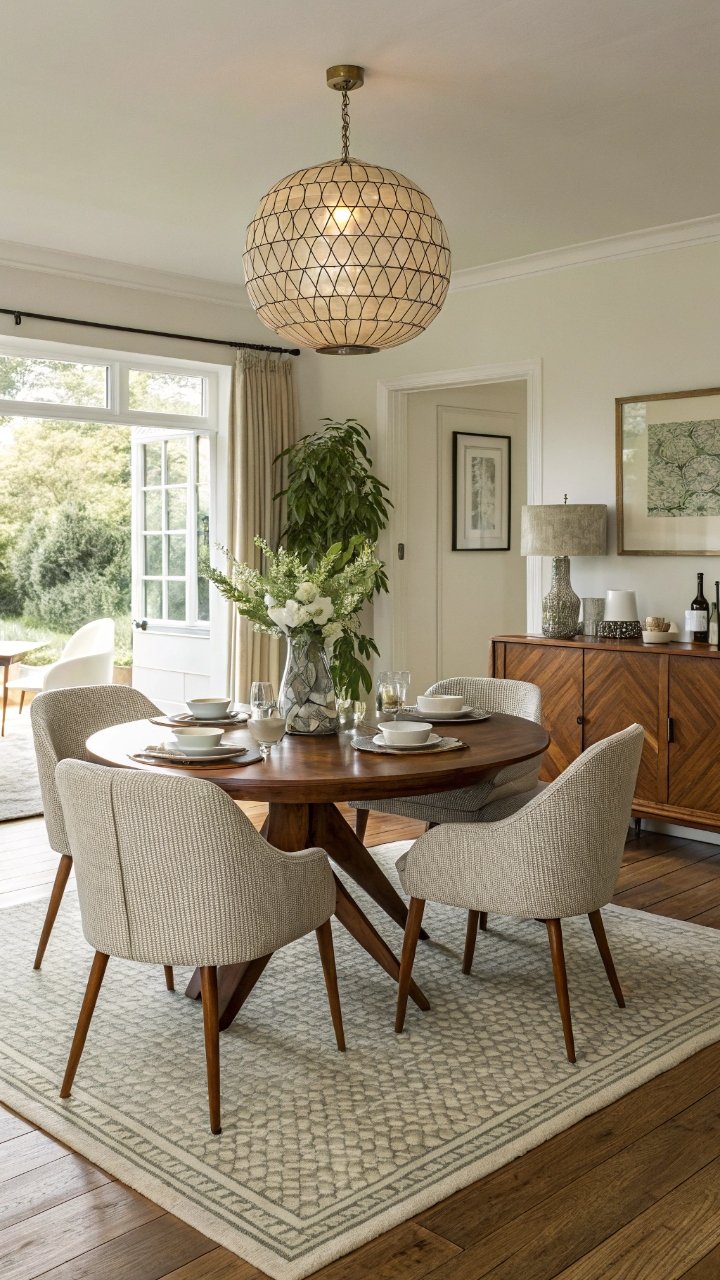
The most memorable dinners rarely end when the plates are cleared away. Comfortable seating encourages guests to relax, settle in, and continue talking long into the evening. Mid-century chairs are known for balancing support and style, making them ideal for spaces designed around connection. When people feel physically comfortable, the room naturally becomes more welcoming and enjoyable to use. Good seating often has a bigger impact on a dining room than people realize.
Pro Tip: Add seat cushions if you frequently host long meals and gatherings.
3. Use Lighting to Create an Evening Ambiance
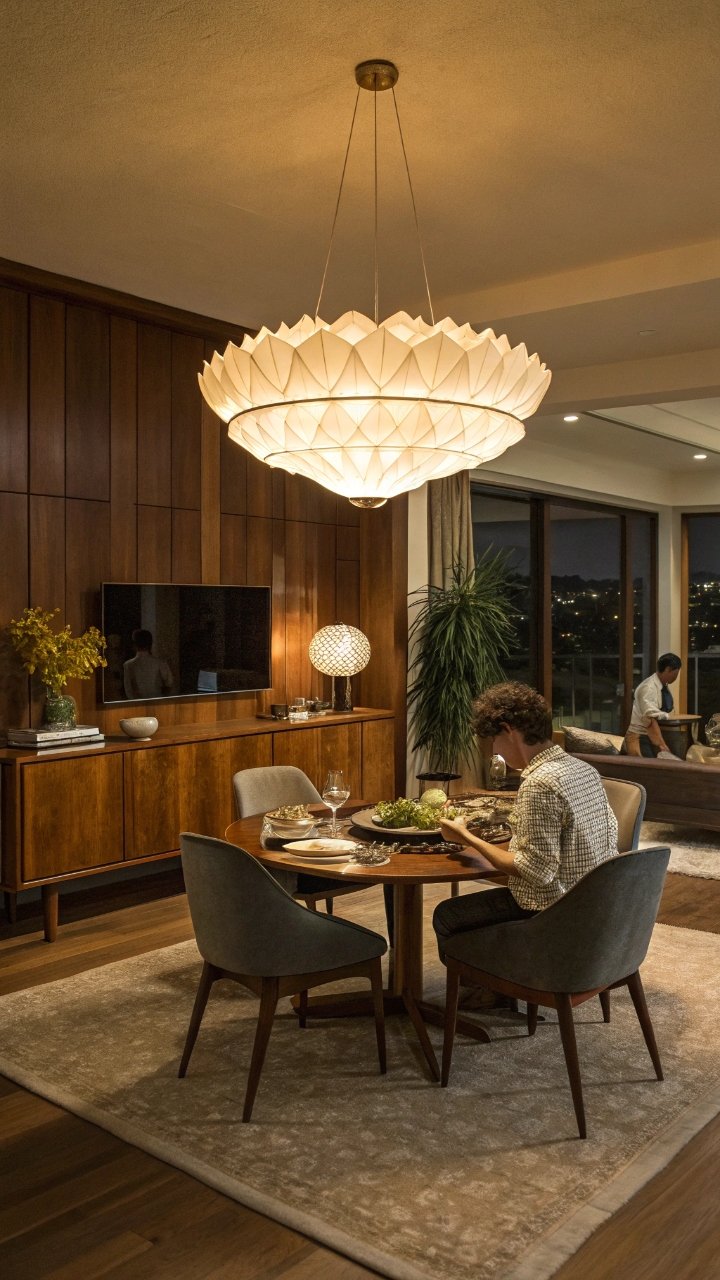
A dining room experiences a dramatic transformation after sunset, making lighting one of the most important design decisions. The right fixture creates a sense of intimacy while helping define the table below. Warm illumination softens the space and encourages a relaxed atmosphere that feels perfect for shared meals and meaningful conversations. Lighting has the unique ability to influence how a room feels without changing a single piece of furniture.
Pro Tip: Choose bulbs with a warm color temperature for a more inviting glow.
4. Add a Sideboard for Everyday Functionality
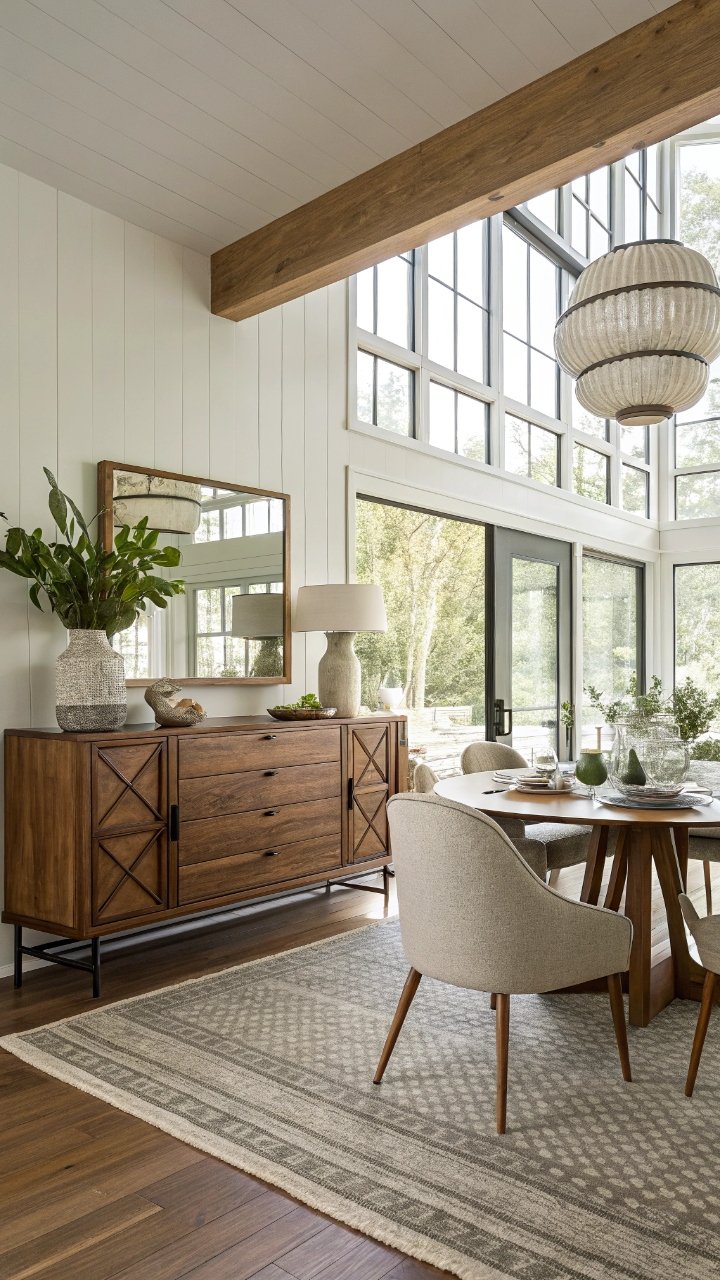
A stylish dining room becomes even better when it works efficiently. Sideboards provide a practical place to store serving pieces, linens, and entertaining essentials while keeping clutter hidden from view. This extra storage helps the room stay organized and allows the dining area to feel calm rather than crowded. Functionality often plays a significant role in creating a timeless interior.
Pro Tip: Use trays inside drawers to keep smaller items neatly organized.
5. Create Interest Through Layered Materials
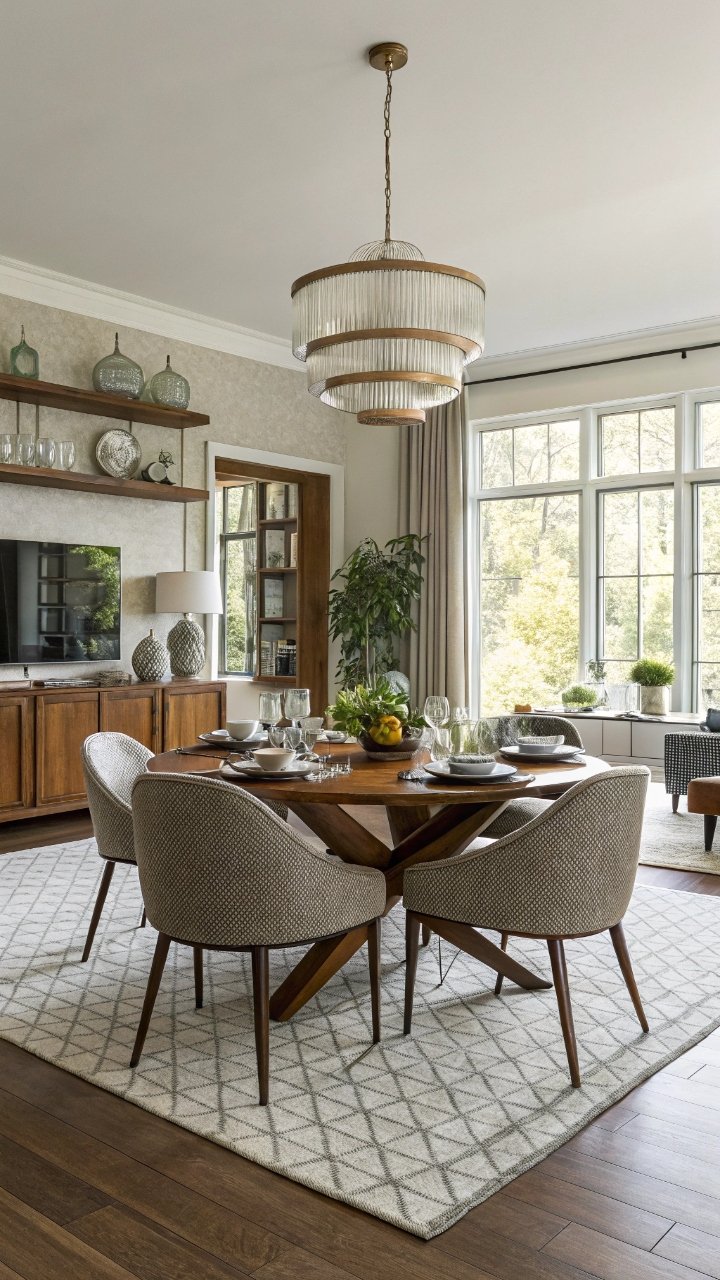
Rooms with only one dominant material can sometimes feel flat or unfinished. Mid-century dining rooms often combine wood, metal, fabric, glass, and ceramics to create a richer visual experience. The contrast between different surfaces adds dimension and keeps the design engaging without relying on excessive decoration. Texture creates depth in a way that color alone cannot.
Pro Tip: Mix smooth and textured finishes for a more balanced look.
6. Let Artwork Reflect Your Personality
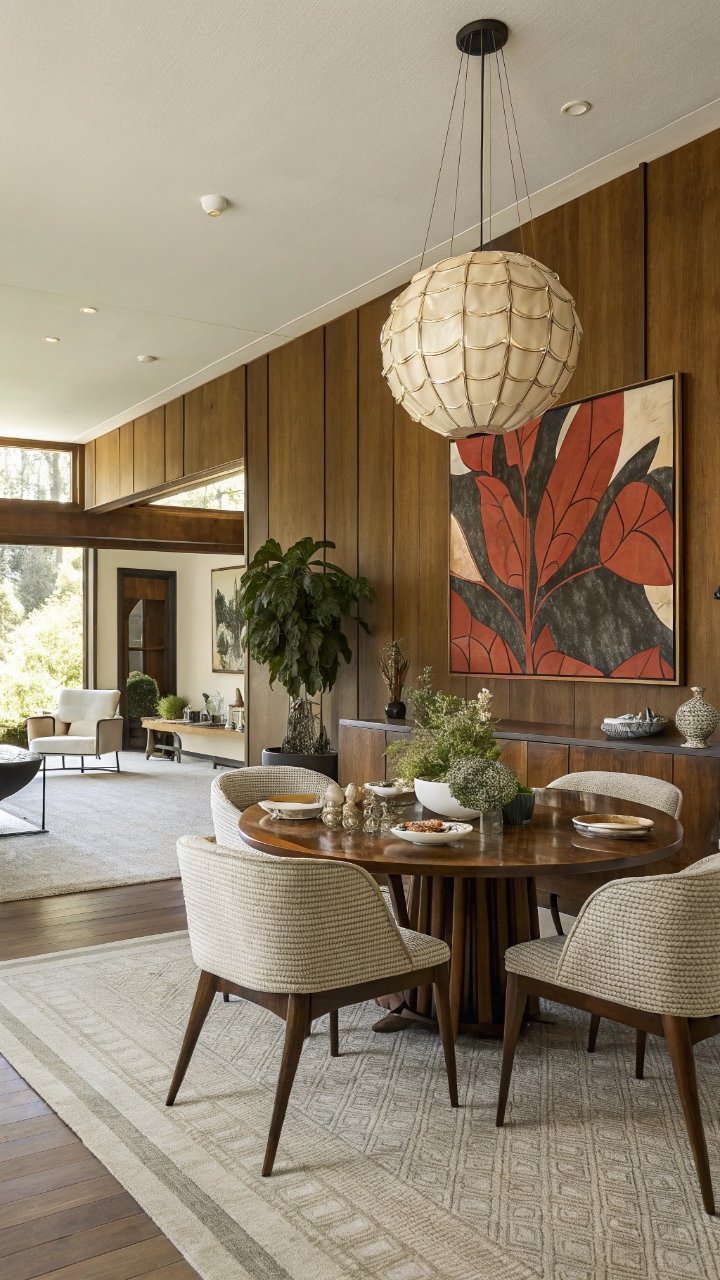
Artwork has the power to make a dining room feel unique and memorable. Instead of treating it as an afterthought, consider it part of the room’s identity. A carefully selected piece can introduce color, spark conversation, and reveal something about your personal style. The right artwork creates an emotional connection that helps the space feel more authentic and lived-in.
Pro Tip: Hang artwork at eye level when viewed from a seated position.
7. Introduce Curves for Visual Balance
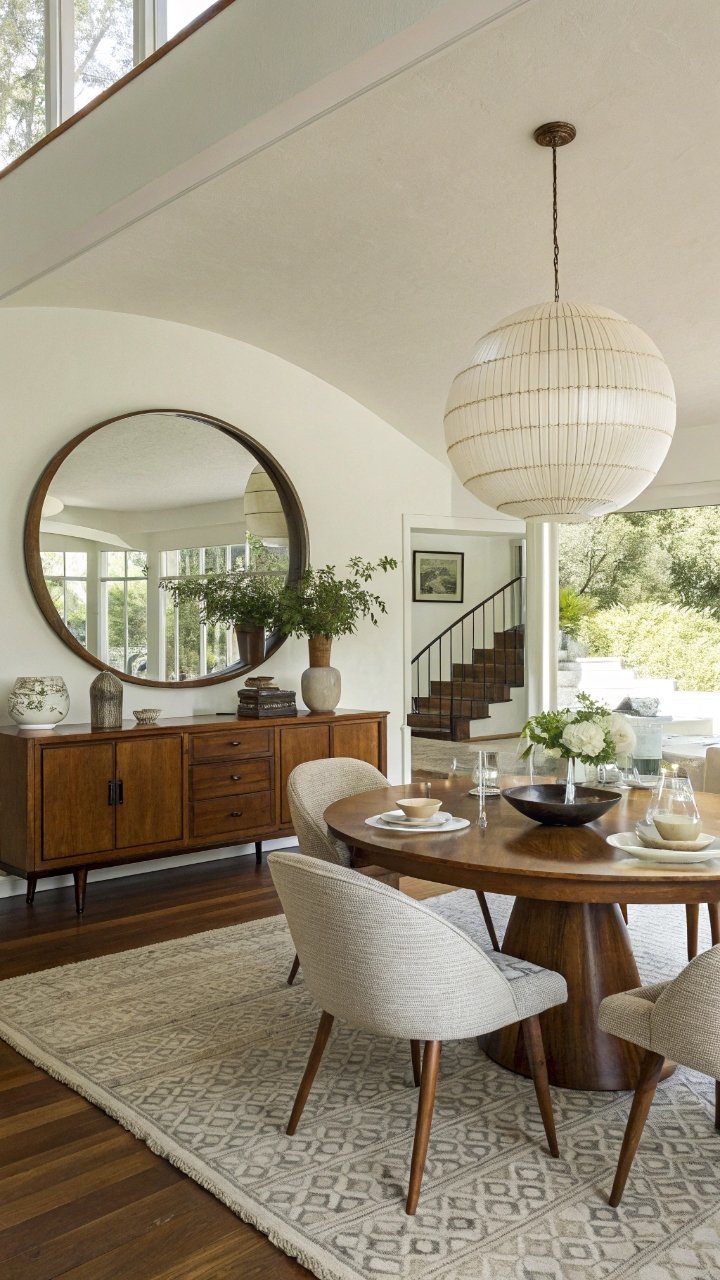
Many dining rooms contain rectangular tables, straight walls, and angular furniture. Adding curved elements helps soften the overall composition and create a more inviting atmosphere. Circular mirrors, rounded light fixtures, and sculptural accessories provide welcome contrast. These shapes help the room feel less rigid and more comfortable without disrupting the design.
Pro Tip: Repeat curved forms in several areas to strengthen visual cohesion.
8. Keep Decorative Styling Intentional
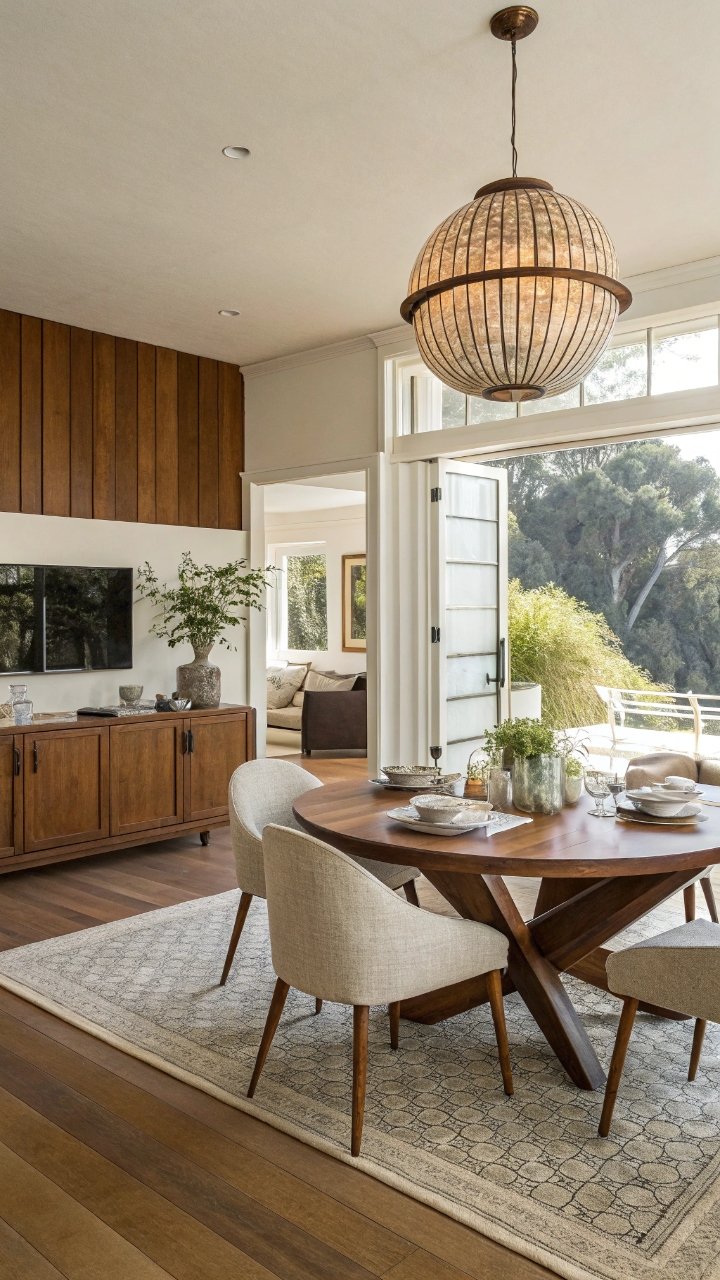
One reason mid-century interiors continue to feel fresh is their restraint. Rather than filling every shelf and surface, they focus on a smaller collection of meaningful pieces. Intentional styling allows individual objects to stand out while preventing the room from feeling visually overwhelming. Sometimes what you leave out matters just as much as what you include.
Pro Tip: Edit decorative displays regularly to keep them feeling fresh.
9. Use a Rug to Define the Space
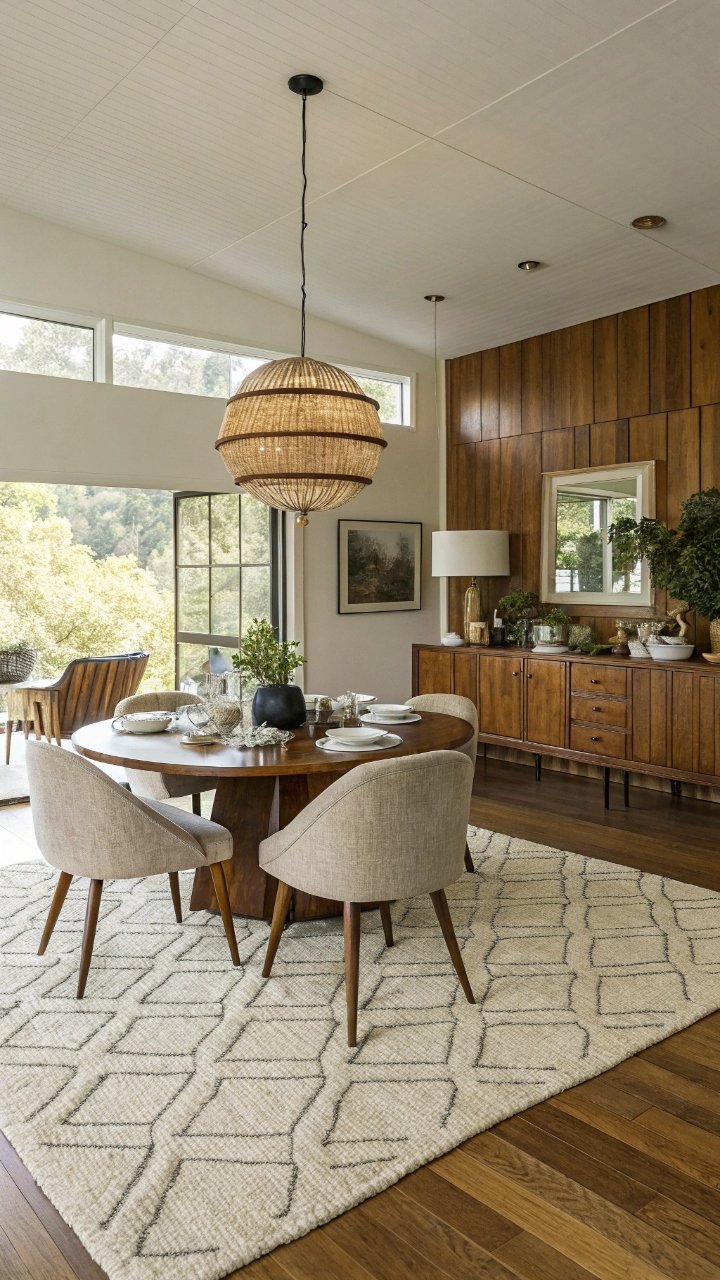
A rug helps establish the dining area as a distinct destination within the home. Beyond adding softness underfoot, it creates a sense of structure and visual grounding. The rug connects the furniture arrangement and makes the room feel more complete and cohesive. It can also help reduce noise, making conversations easier during busy gatherings.
Pro Tip: Choose a rug large enough for chairs to remain on it when pulled back.
10. Bring Life Into the Room with Greenery
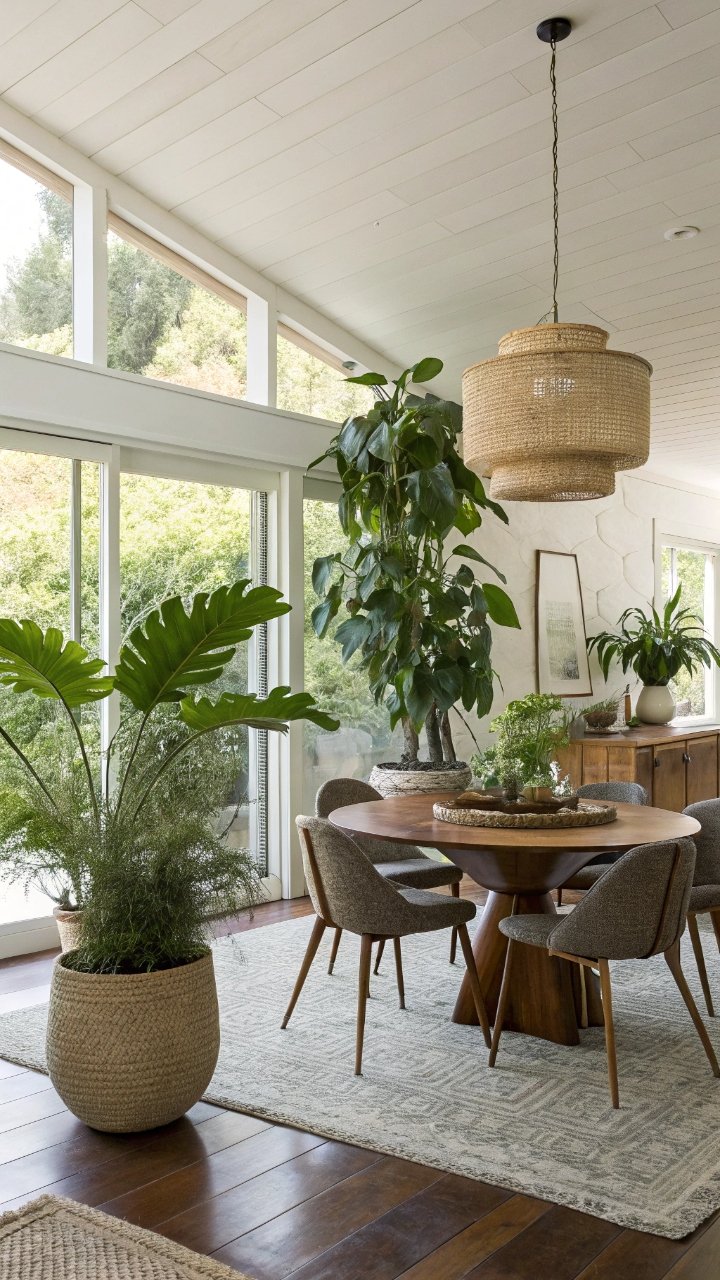
Plants contribute energy and movement in a way few decorative elements can. Whether placed in a corner or displayed as a centerpiece, greenery adds freshness and helps the room feel more dynamic. Natural elements create a welcoming atmosphere that balances the clean lines often associated with mid-century design. Even a single plant can make the room feel more vibrant.
Pro Tip: Select easy-care varieties if maintenance is a concern.
11. Mix New Pieces with Vintage Finds
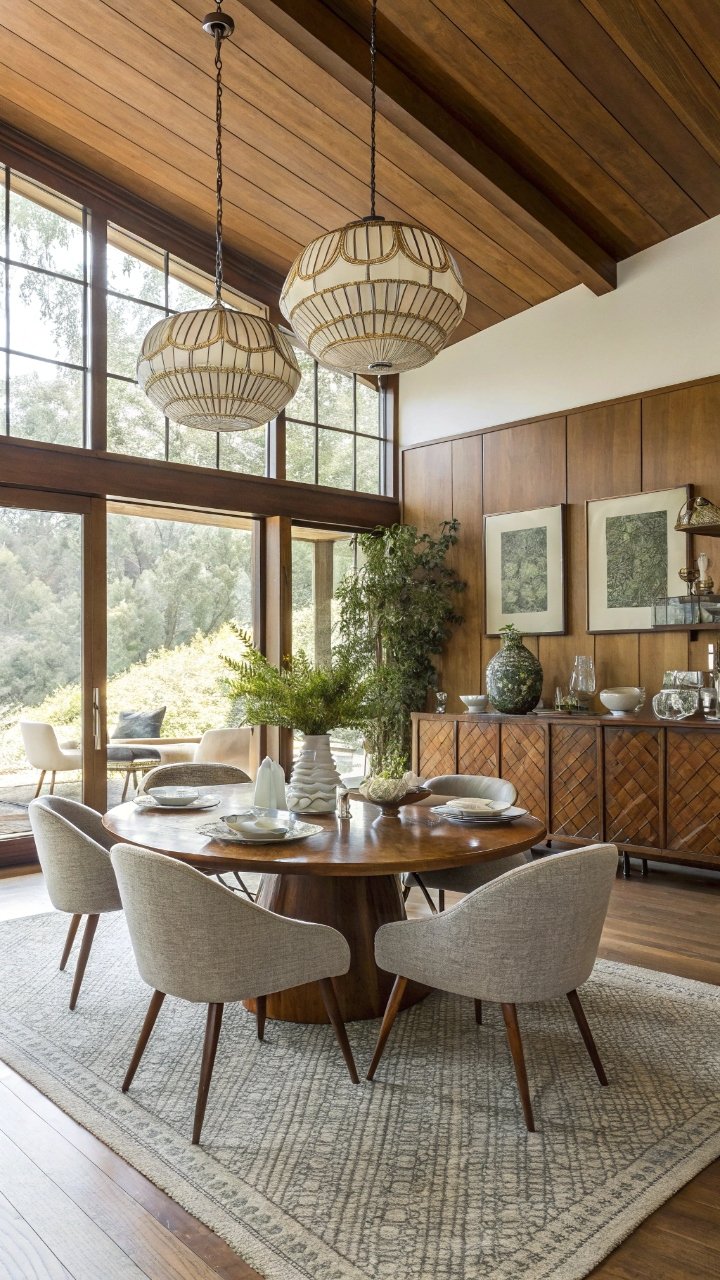
A dining room becomes more interesting when it doesn’t feel like everything was purchased at the same time. Combining vintage discoveries with newer furnishings creates depth and personality. This layered approach helps the room feel collected over time rather than staged, resulting in a more distinctive and memorable space. Character often comes from thoughtful contrast.
Pro Tip: Look for recurring shapes or finishes to connect different pieces.
12. Make Natural Light Part of the Experience
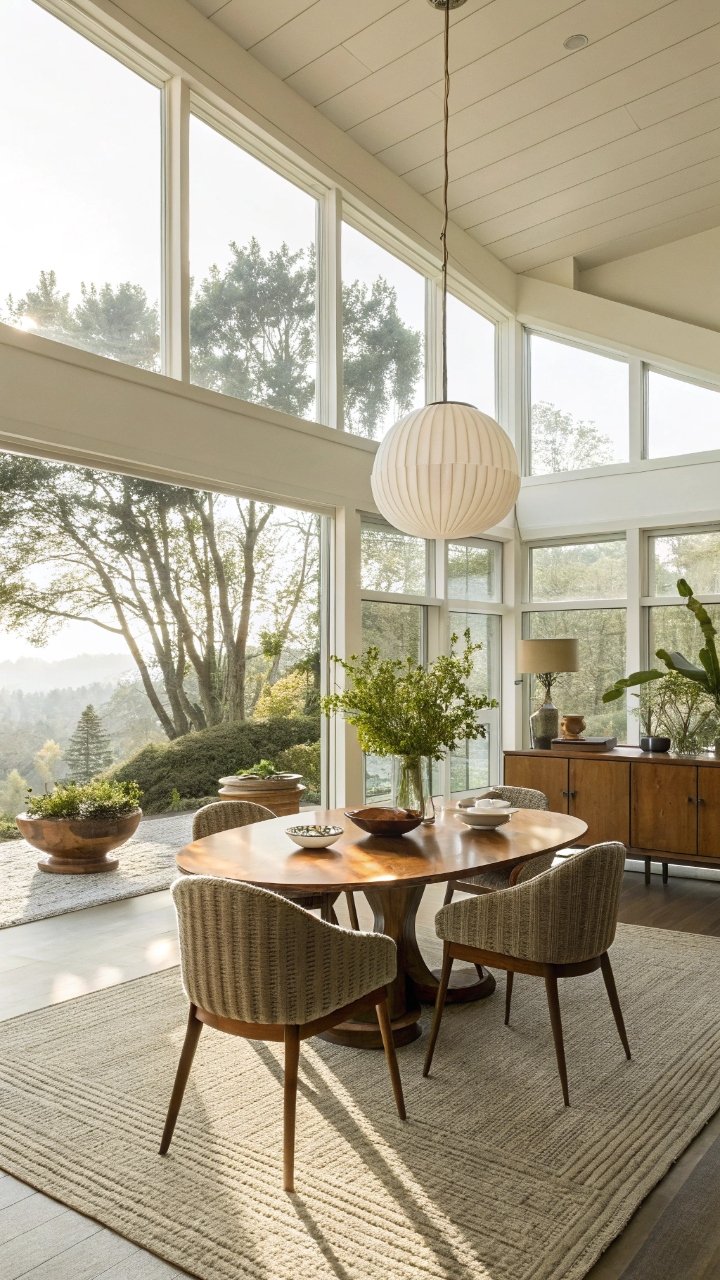
The quality of daylight affects how a dining room feels throughout the day. Rooms that welcome natural light often appear more open, uplifting, and comfortable. Sunlight highlights materials, enhances colors, and creates subtle changes that keep the room visually interesting from morning to evening. The effect is difficult to replicate with artificial lighting alone.
Pro Tip: Avoid heavy window coverings that block valuable daylight.
13. Design Around Real Life
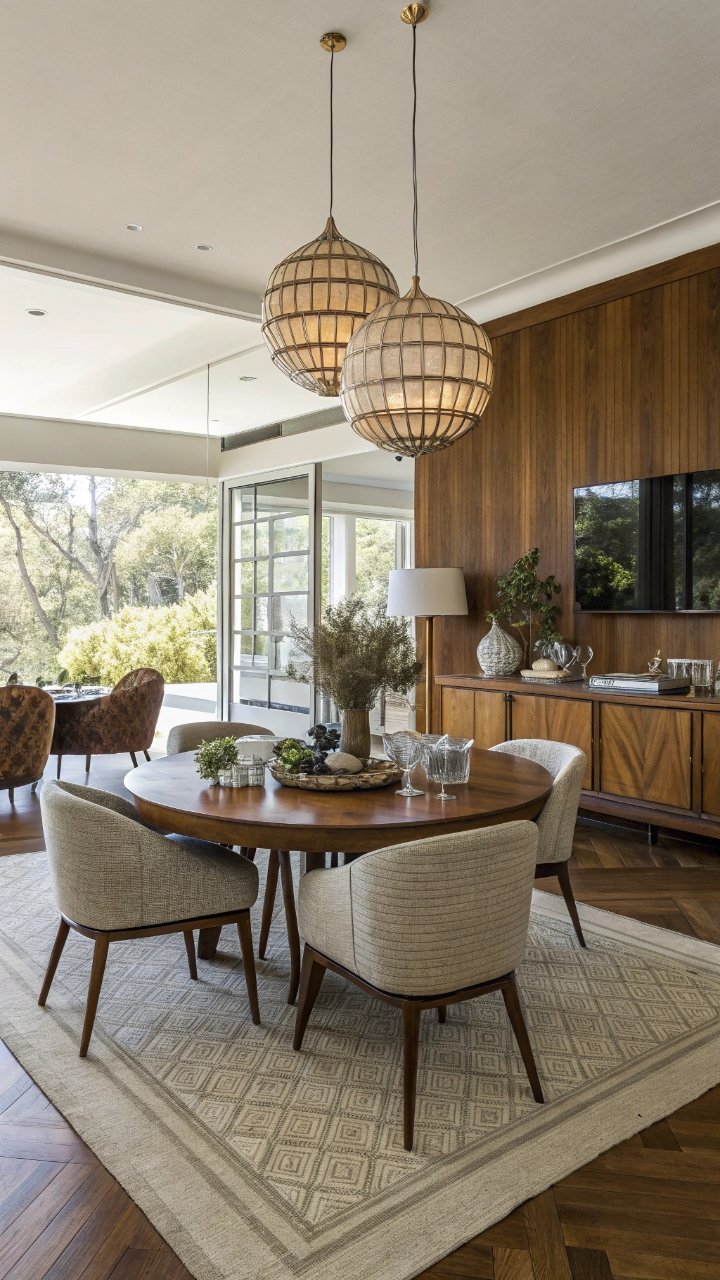
The most timeless dining rooms aren’t built solely for appearances. They’re designed to support everyday meals, celebrations, homework sessions, holiday gatherings, and everything in between. Mid-century design succeeds because it embraces practicality without sacrificing style. A room that functions beautifully for daily life will always feel more successful than one created only for display. Lasting design is ultimately about improving the way people live and connect.
Pro Tip: Arrange furniture based on how you actually use the space rather than following strict design rules.
Conclusion
Timeless dining rooms rarely depend on dramatic trends or complicated decorating schemes. Instead, they succeed through thoughtful decisions that improve comfort, functionality, and atmosphere. Mid-century modern design continues to inspire because it focuses on creating spaces that feel useful, welcoming, and visually balanced. Its principles remain relevant because they support the way people naturally gather and interact.
Whether you incorporate a statement table, improve the lighting, introduce layered materials, or simply simplify the room’s layout, each change can contribute to a more enjoyable dining experience. By focusing on how the space feels rather than chasing fleeting trends, you can create a dining room that remains stylish and inviting year after year. Great design isn’t about following rules—it’s about creating a room people genuinely love spending time in.