16 Beautiful Mid Century Dining Room Ideas for a Sophisticated Home
Some rooms seem to make every meal feel a little more special. A thoughtfully designed dining room can turn a quick breakfast into a peaceful start to the day and transform an ordinary dinner into an occasion worth remembering. While trends constantly come and go, mid-century modern dining rooms continue to capture attention because they strike a rare balance between elegance and ease. They feel polished without being formal and stylish without feeling forced.
One reason this design style remains so popular is its focus on how people actually use a space. Mid-century interiors prioritize comfort, conversation, and practicality while still looking beautifully put together. Rather than filling a room with unnecessary decorations, the design relies on strong furniture silhouettes, quality materials, and carefully considered details that naturally draw people in.
Whether you’re planning a complete makeover or looking for fresh decorating inspiration, these mid-century dining room ideas offer plenty of ways to create a sophisticated space. From improving how guests interact around the table to creating better ambiance for entertaining, each idea focuses on a different element that contributes to a dining room you’ll enjoy for years to come.
1. Make the Dining Table the Main Attraction
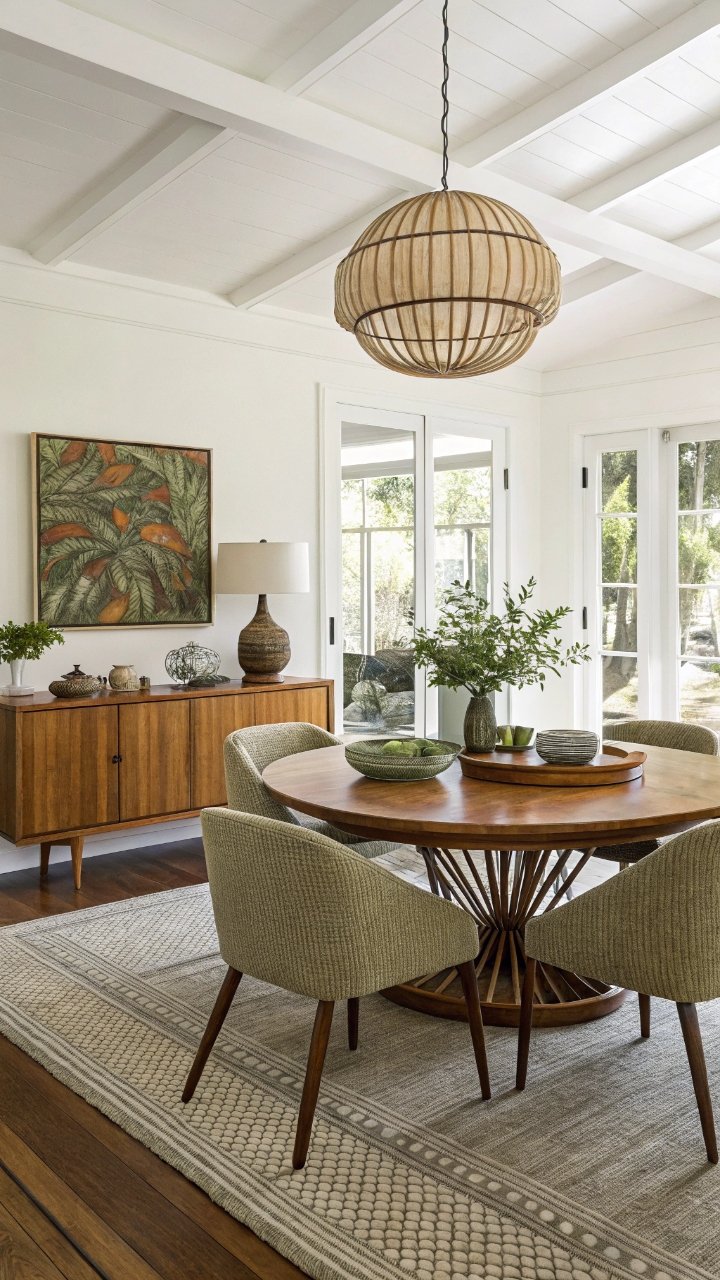
Every successful dining room needs a centerpiece, and nothing deserves that role more than the dining table itself. Instead of treating it as just another piece of furniture, think of it as the foundation that influences every gathering, celebration, and everyday meal. A well-proportioned mid-century table creates a sense of purpose within the room while providing a natural place for people to gather. The simplicity of its design allows the craftsmanship to take center stage. When guests enter the space, their attention naturally settles on the table first, setting the tone for the entire room.
Pro Tip: Choose a table size that allows comfortable movement around all sides.
2. Invest in Chairs People Actually Want to Sit In
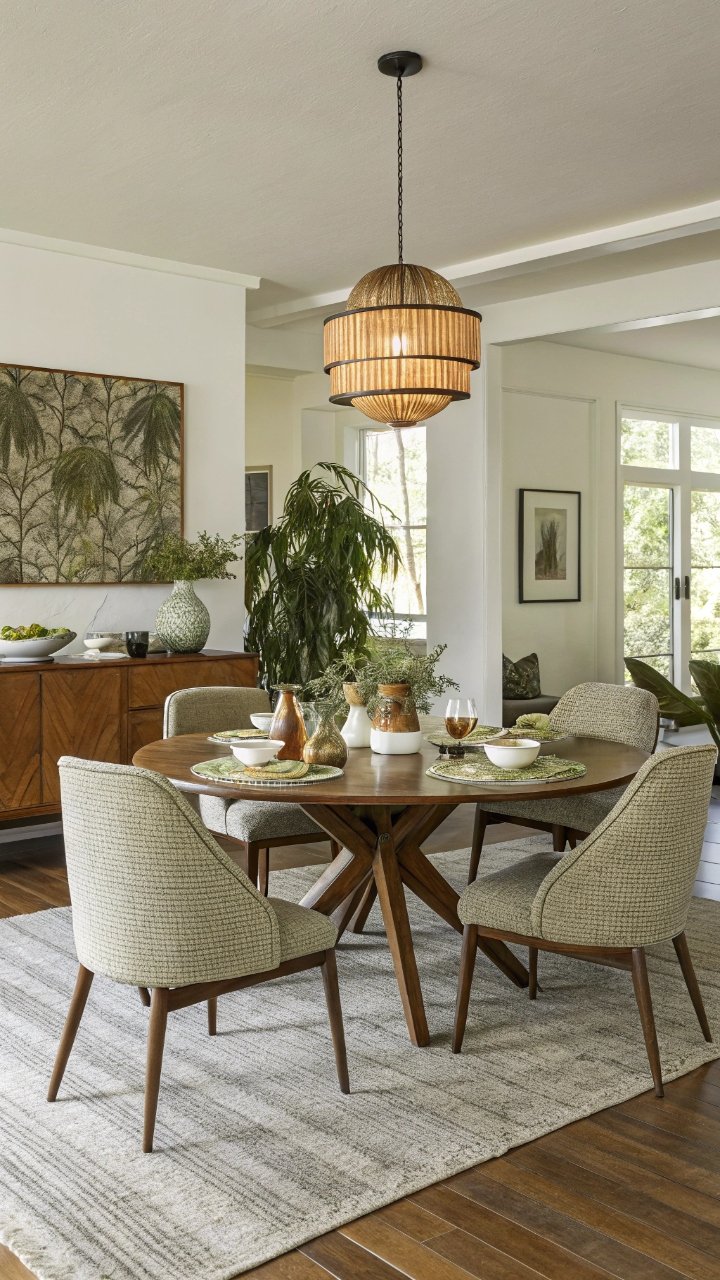
Beautiful dining chairs mean very little if nobody enjoys sitting in them. Mid-century designers understood this better than most, creating seating that combines visual appeal with genuine comfort. Supportive chairs encourage guests to stay longer, making conversations feel more relaxed and enjoyable. The right seating can transform a quick dinner into an evening that stretches pleasantly into the night. Comfort often becomes the invisible detail people remember most after visiting a home.
Pro Tip: Test seat depth and back support before making a final purchase.
3. Create Better Atmosphere with Statement Lighting
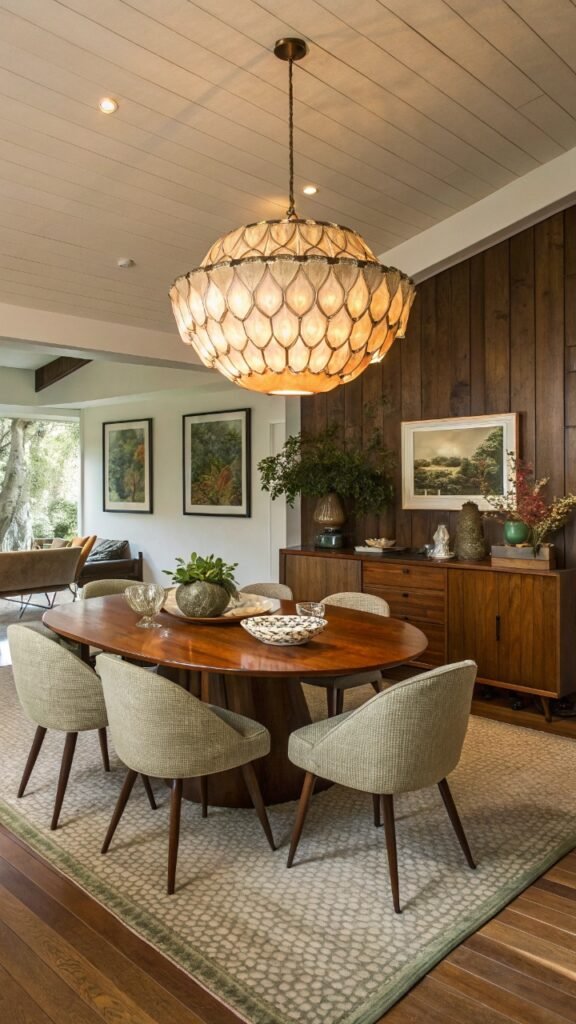
Lighting has the power to completely change the mood of a dining room. During daylight hours, furniture may receive most of the attention, but once evening arrives, the lighting becomes the star. A striking pendant fixture creates a warm and inviting environment that encourages people to slow down and enjoy the moment. The glow helps make meals feel more intimate while adding architectural interest overhead. Good lighting transforms the entire dining experience without requiring major renovations.
Pro Tip: Install dimmers so you can adjust brightness for different occasions.
4. Use a Sideboard to Simplify Entertaining
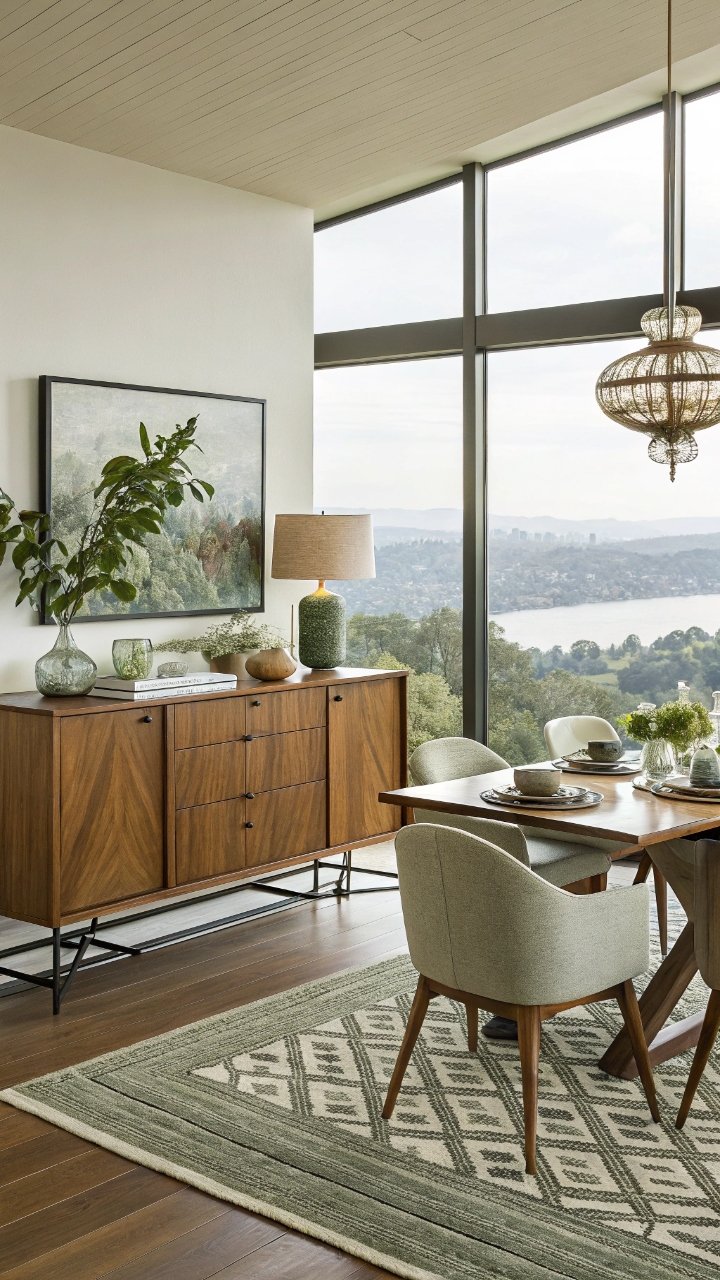
Hosting becomes much easier when everything has a designated place. A mid-century sideboard offers storage for serving dishes, table linens, and entertaining essentials while keeping clutter out of sight. During gatherings, it also serves as a convenient surface for drinks, desserts, or buffet-style meals. The functionality it provides helps the dining room operate more efficiently. Practical furniture often contributes more to a room’s success than decorative pieces ever can.
Pro Tip: Reserve one cabinet section specifically for entertaining supplies.
5. Let Artwork Start Conversations
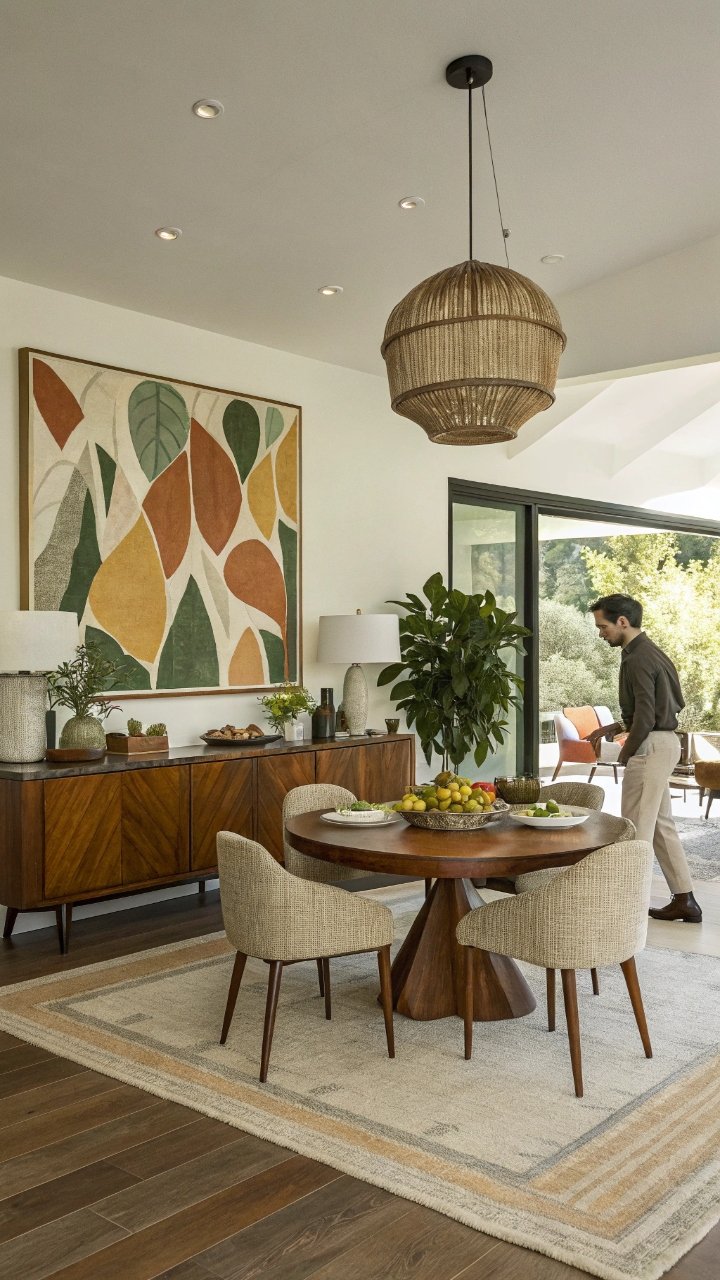
Artwork can reveal a lot about the people who live in a home. A thoughtfully selected piece introduces personality and creates opportunities for discussion during meals. Mid-century dining rooms often benefit from bold abstract works that bring energy without overwhelming the space. Guests naturally notice interesting artwork, making it one of the easiest ways to add individuality. A dining room should feel personal, not staged.
Pro Tip: Choose artwork that genuinely resonates with you rather than following trends.
6. Introduce Color Through Small Doses
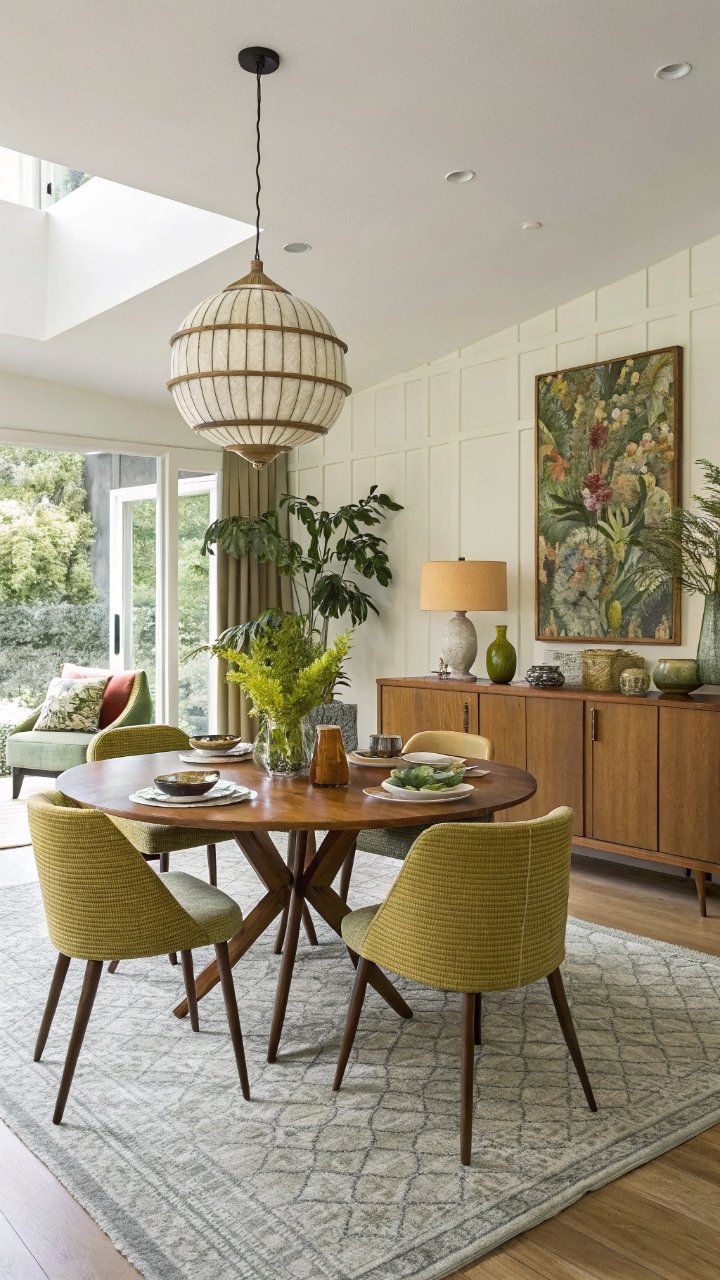
A sophisticated room doesn’t always require a dramatic color scheme. Strategic accents often have a stronger impact than covering every surface with bold shades. A few carefully chosen touches can add vibrancy while preserving the clean aesthetic associated with mid-century design. Small pops of color help direct attention and prevent the room from feeling predictable. Sometimes restraint creates a more memorable result.
Pro Tip: Repeat accent colors in at least three places throughout the room.
7. Define the Dining Area with a Rug
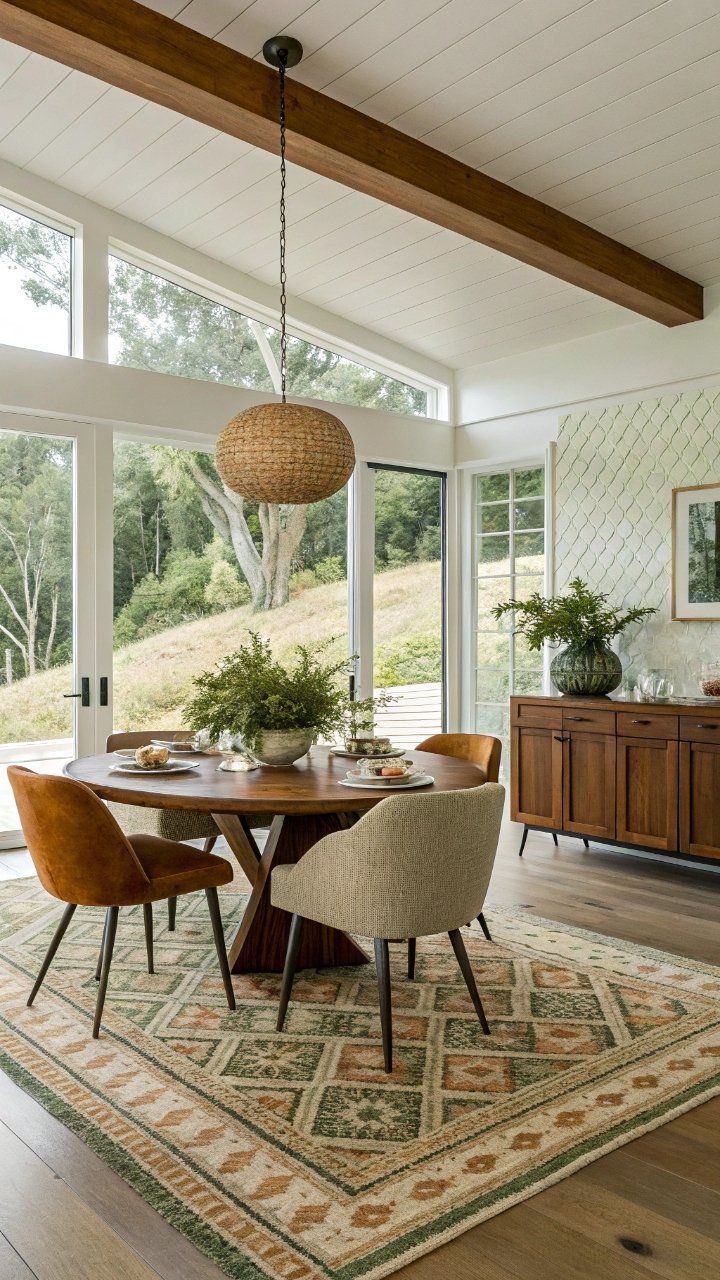
A rug does more than protect flooring. It visually anchors the dining set and helps establish the room as a distinct gathering zone. The added softness also improves acoustics, making conversations easier during busy dinners. Without realizing it, people often feel more comfortable in spaces that absorb sound effectively. A dining room should invite connection rather than amplify every noise.
Pro Tip: Ensure all chair legs remain on the rug, even when pulled out.
8. Add Curves to Balance Straight Lines
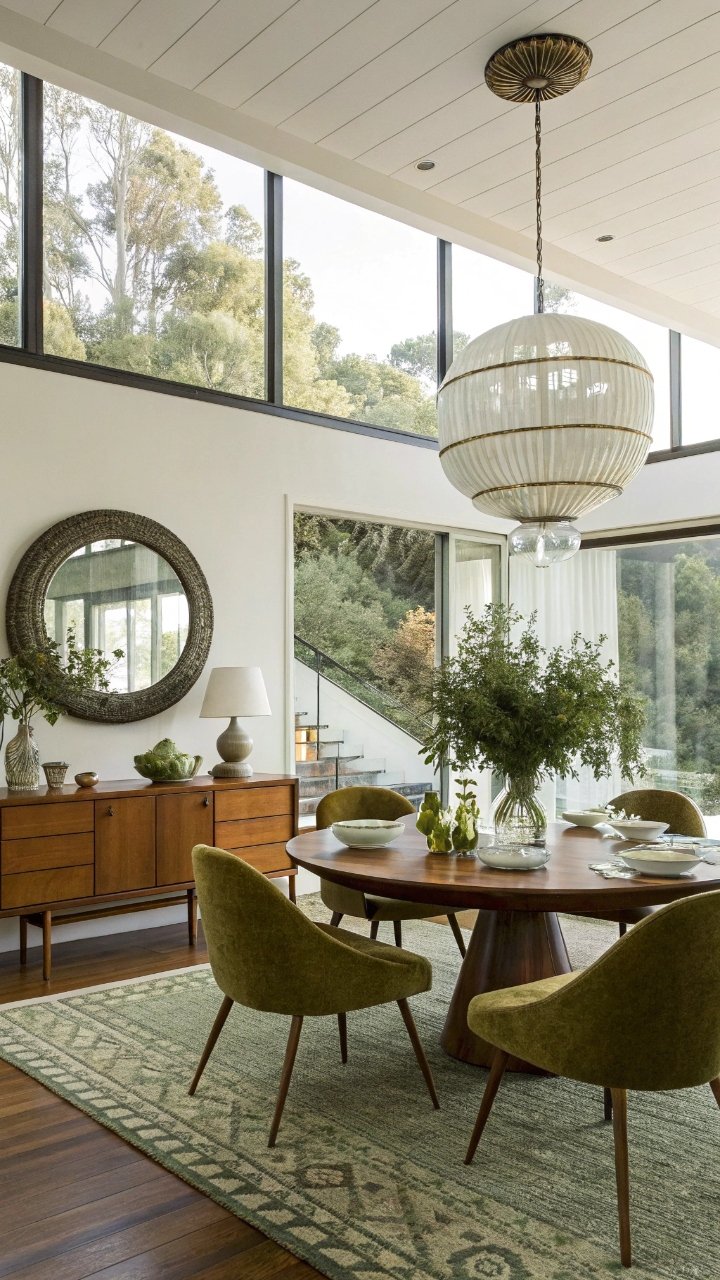
Too many angular elements can make a room feel rigid. Mid-century spaces often solve this problem by introducing curved forms through mirrors, lighting, or decorative objects. These softer shapes create balance and help the room feel more approachable. The contrast between straight and curved lines keeps the design visually engaging. Variety often makes a space feel more natural and comfortable.
Pro Tip: Repeat curved elements throughout the room for consistency.
9. Display Fewer Decorative Items
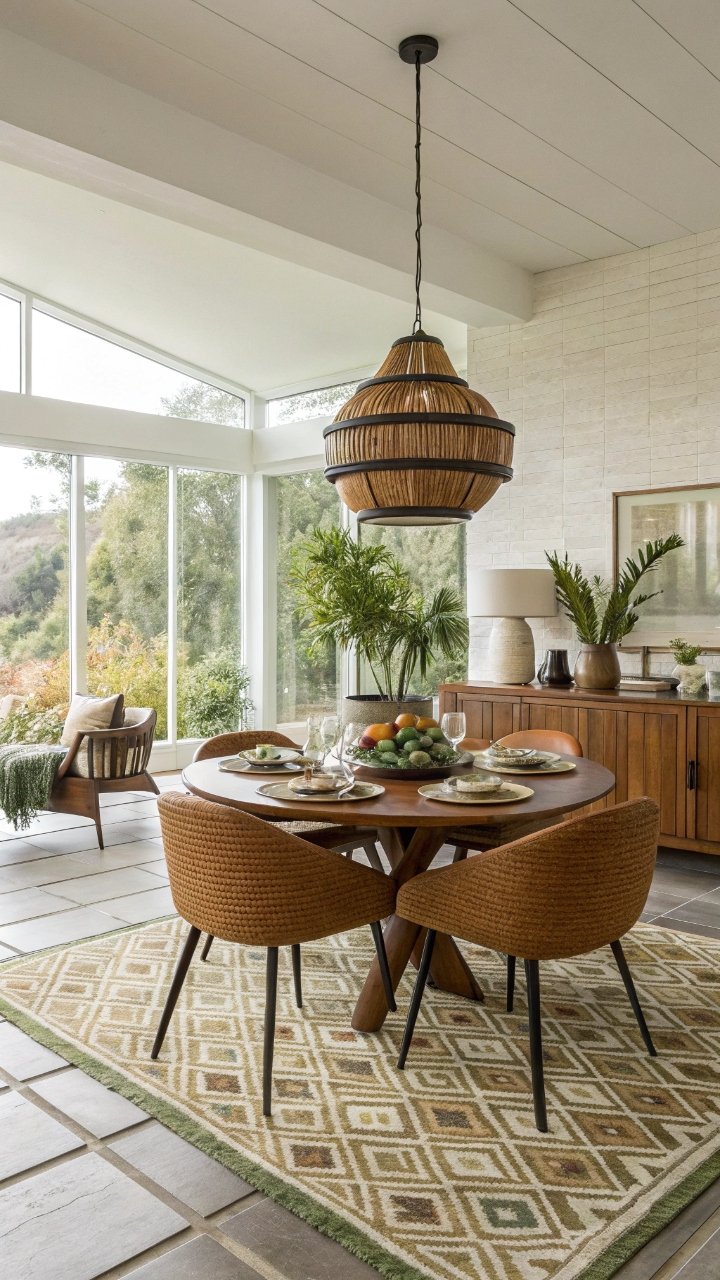
One common decorating mistake is trying to fill every empty surface. Mid-century interiors thrive because they allow certain pieces room to breathe. A few meaningful accessories usually create more impact than dozens of smaller objects competing for attention. Empty space helps highlight the items you truly value. The result feels intentional rather than overcrowded.
Pro Tip: Remove one-third of your decorative items and reassess the room.
10. Bring Nature Closer to the Table
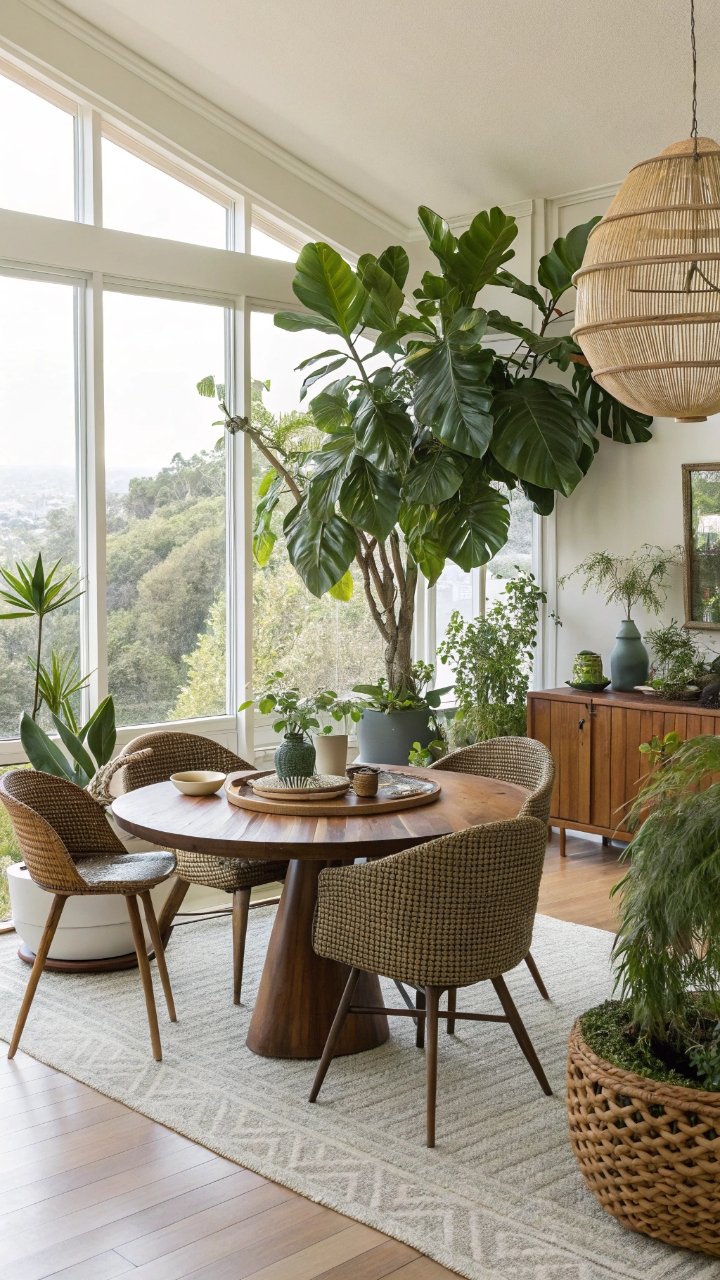
Dining spaces naturally feel more welcoming when they include organic elements. Greenery introduces movement, texture, and freshness while softening furniture and architectural features. Plants can make a room feel alive without requiring major design changes. Their presence helps create a more relaxed and inviting atmosphere for everyday meals and special occasions alike.
Pro Tip: Choose low-maintenance varieties if the room receives limited sunlight.
11. Mix Different Textures
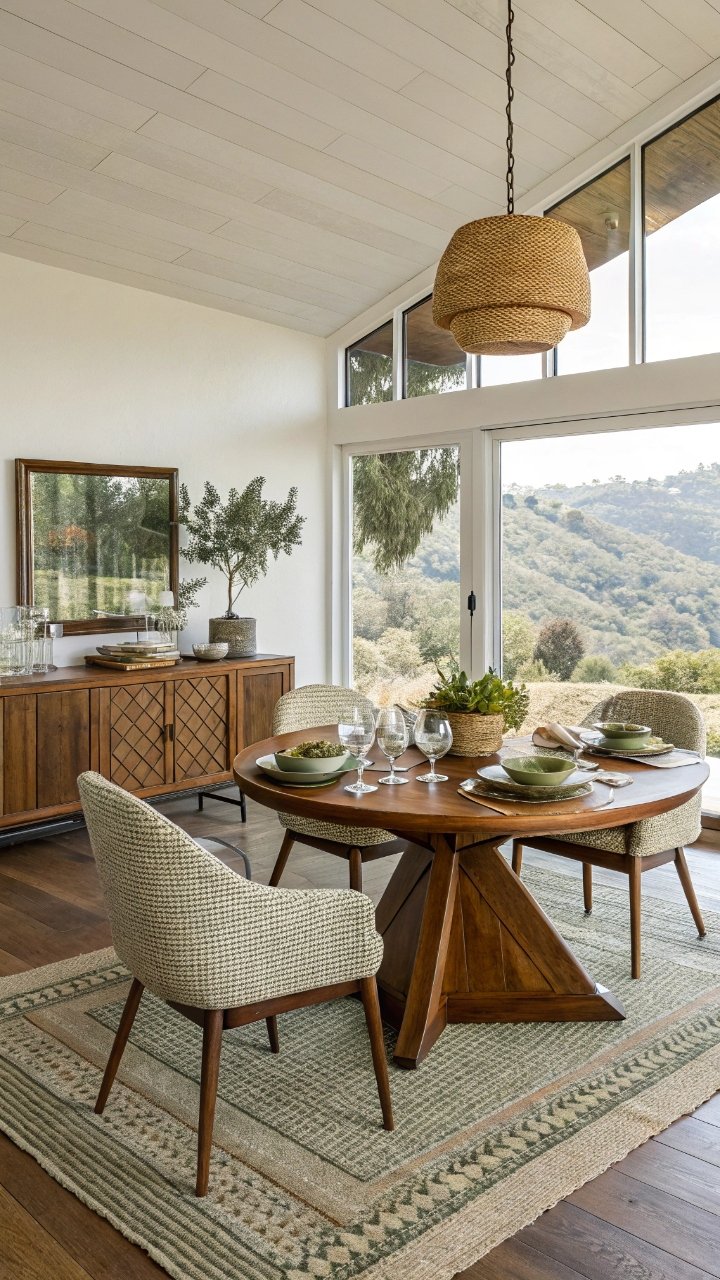
Texture often has a greater impact than color. Combining smooth wood, woven materials, ceramics, fabric, and metal creates a richer environment that feels layered and interesting. Guests may not consciously notice every texture, but they will sense the depth it adds. A room with varied materials often feels more sophisticated than one relying on a single finish.
Pro Tip: Aim for at least three distinct textures within the dining area.
12. Leave Space for Movement
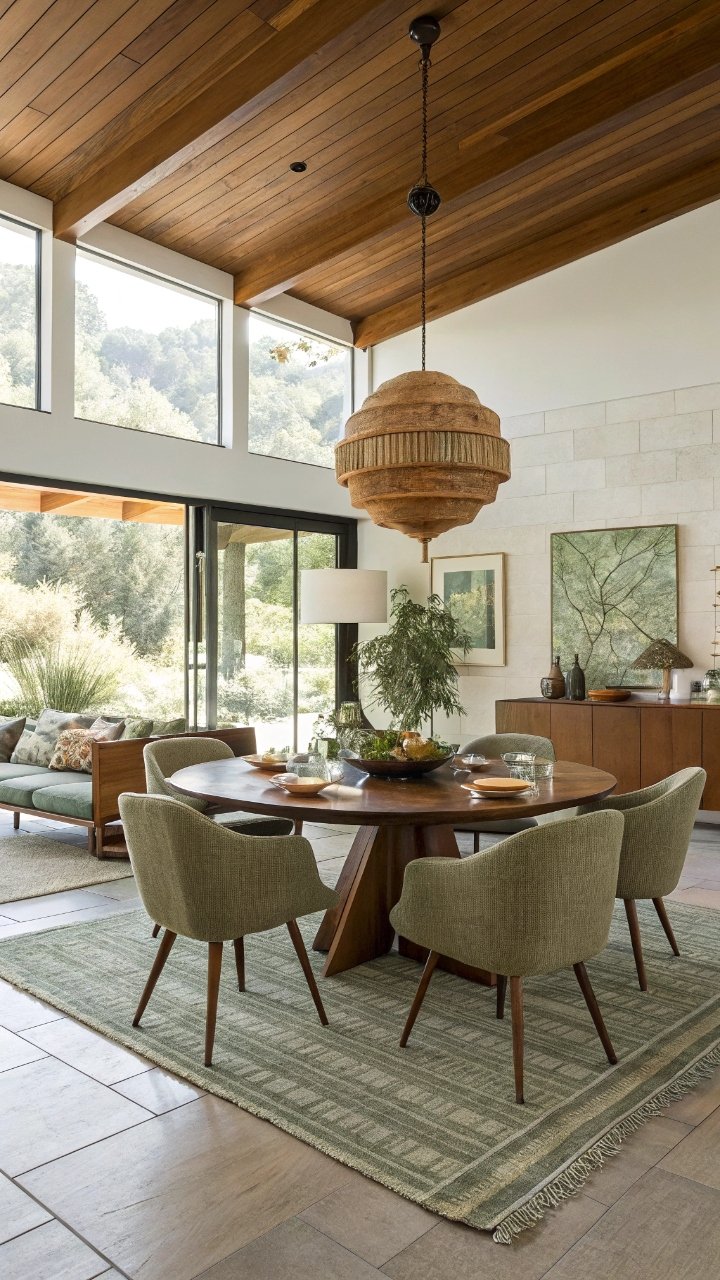
A beautiful dining room becomes frustrating if navigating it feels difficult. Good layouts prioritize circulation, allowing people to move comfortably around the table and furniture. Spacious arrangements also make rooms feel more relaxed and less crowded. The ability to move freely contributes significantly to the overall experience.
Pro Tip: Maintain at least 36 inches of clearance around the table.
13. Blend Vintage and New Pieces
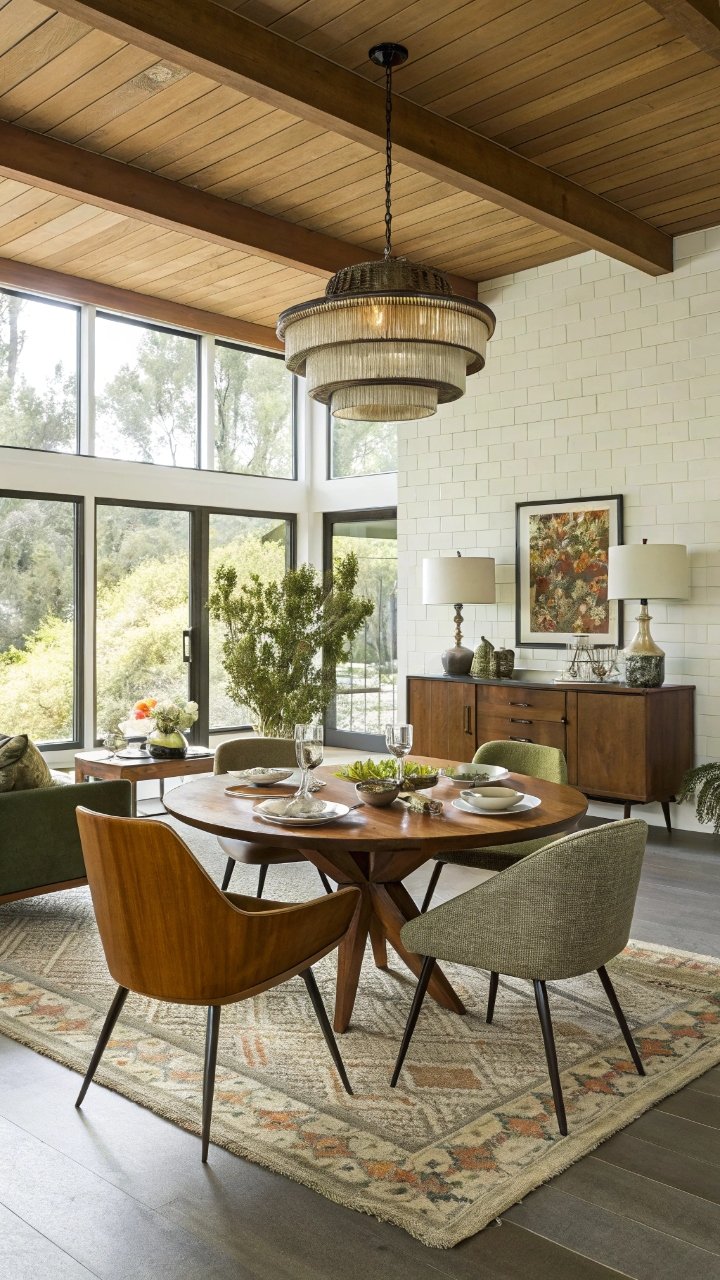
The most interesting interiors often evolve over time rather than appearing fully purchased in one weekend. Combining older pieces with contemporary additions creates character and prevents a room from feeling overly predictable. The contrast between different eras adds depth while making the space feel uniquely personal.
Pro Tip: Focus on shared shapes or materials to create visual harmony.
14. Make Natural Light Part of the Design
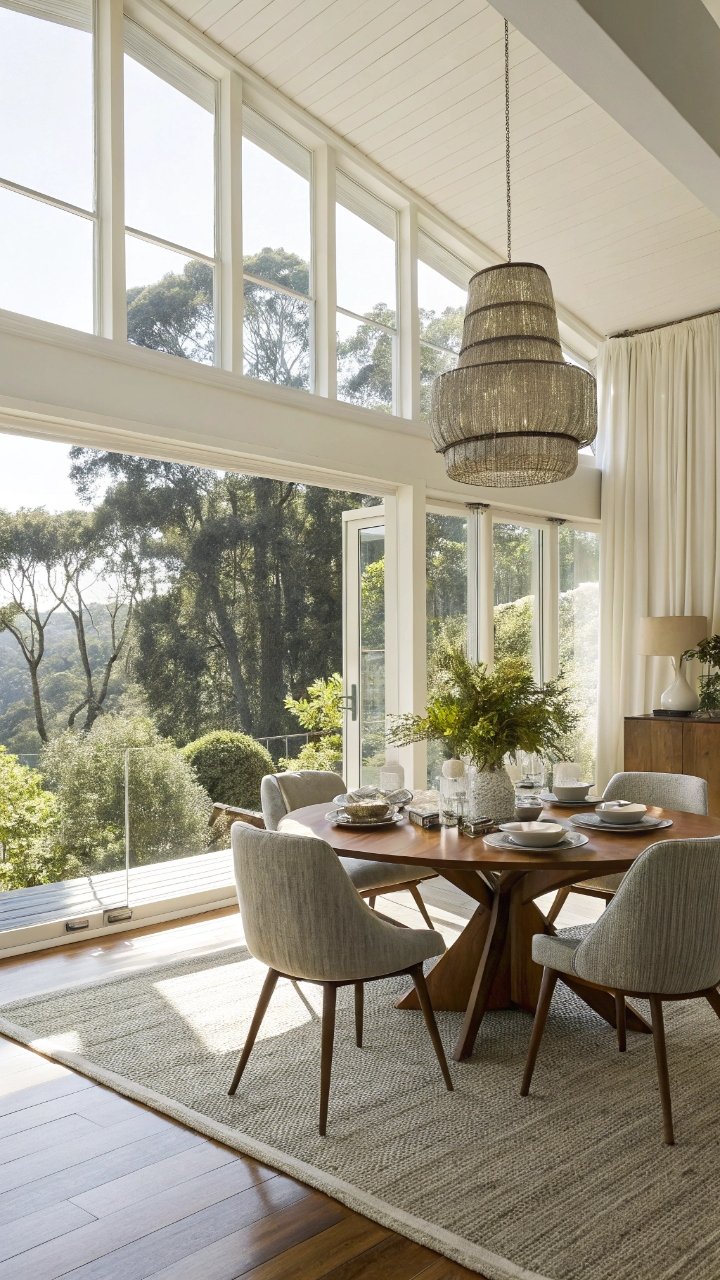
Sunlight changes the appearance of a room throughout the day. Instead of blocking it, allow it to become part of the overall design. Natural light highlights textures, enhances colors, and creates a more uplifting atmosphere. Dining rooms often feel larger and more welcoming when they embrace daylight.
Pro Tip: Use lightweight window treatments that filter rather than block light.
15. Create a Strong Focal Point
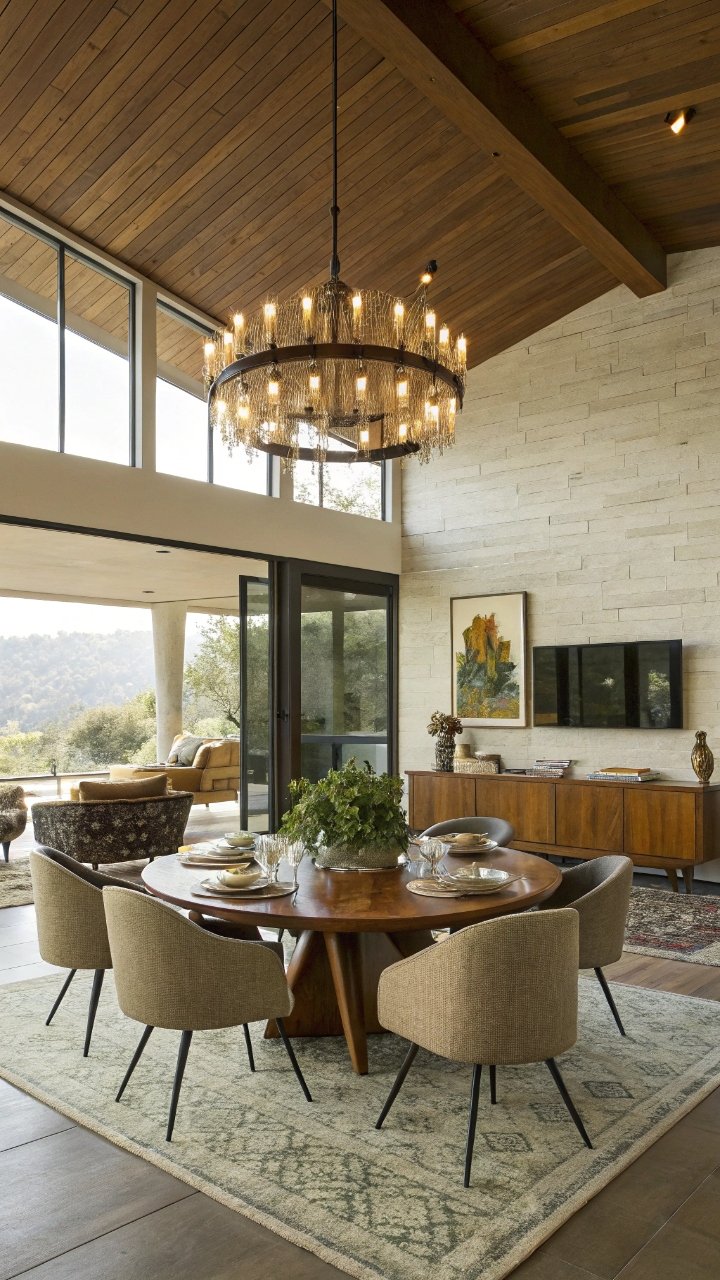
Every memorable room has something that captures attention first. Whether it’s a dramatic light fixture, a beautiful table, or a large piece of art, a focal point helps organize the entire design. Without one, rooms can feel scattered and unfinished. A clear visual anchor creates confidence and direction.
Pro Tip: Limit yourself to one primary focal point per room.
16. Design for Gatherings, Not Perfection
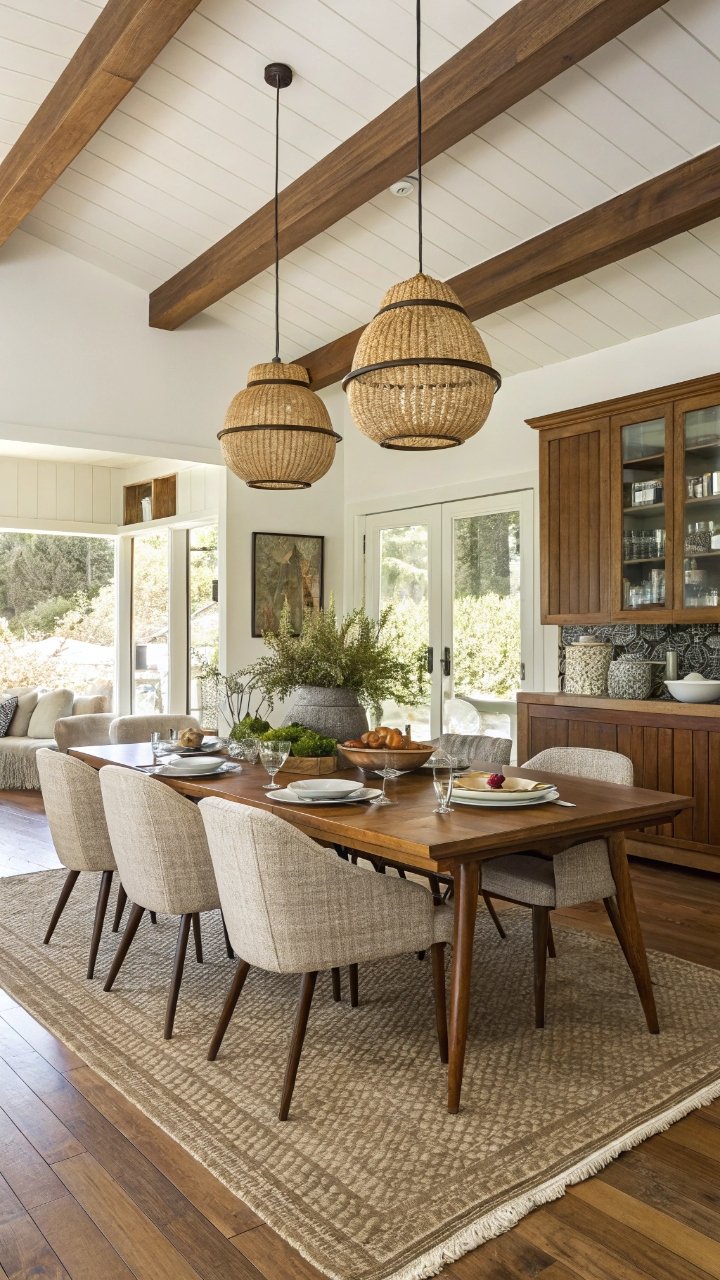
The most successful dining rooms aren’t the ones that look untouched. They’re the rooms where birthdays are celebrated, holidays are shared, and friends lose track of time during conversation. Mid-century design works so well because it supports real life rather than focusing solely on appearances. A dining room should feel welcoming enough to use every day while still feeling special when guests arrive.
Pro Tip: Prioritize comfort and functionality before decorative details.
Conclusion
A sophisticated dining room isn’t created through expensive purchases alone. It comes from thoughtful choices that improve how the space feels and functions. Mid-century modern design continues to resonate because it focuses on creating environments where people genuinely enjoy spending time. Every element serves a purpose while contributing to the overall atmosphere.
Whether you’re updating a few details or planning a complete transformation, these ideas demonstrate that great design is often about intention rather than excess. By focusing on comfort, balance, practicality, and personality, you can create a dining room that feels inviting every day and impressive whenever guests gather around the table.