15 DIY Garden Border Ideas for a Fresh Landscape Upgrade
I used to think a garden only looked “finished” if everything matched perfectly, like something straight out of a magazine spread, but my own yard had other plans. The edges blurred into the grass, plants wandered wherever they wanted, and nothing really stood out the way I imagined it would. One afternoon, I grabbed a few random materials—some leftover wood, a handful of stones, even a couple of things I almost threw away—and started defining the borders just to see what would happen. That small experiment changed everything, and suddenly the space felt intentional, like it finally had a voice.
As I kept working on different sections, I realized garden borders do more than just separate areas—they guide your eye, create rhythm, and give the whole space a sense of structure without feeling stiff. I started noticing textures more, how rough wood contrasts with soft greenery, or how clean edges make flowers pop in a totally different way. It became a little addictive, not gonna lie, because every new border idea brought a fresh personality to the yard. And the best part? Most of these upgrades cost next to nothing, which made the process feel even more satisfying.
Now, whenever I look at my garden, I don’t see random plants anymore—I see a collection of little moments, each framed in its own unique way. Borders turned out to be that missing piece that pulls everything together without trying too hard. If your space feels a bit unfinished or lacks that “wow” factor, you’re probably closer than you think to fixing it. With a few DIY ideas and a bit of creativity, you can upgrade your landscape in ways that feel personal, stylish, and honestly kind of fun. Let’s get into some ideas that can transform your garden without draining your wallet.
1. Painted Brick Borders for a Pop of Color
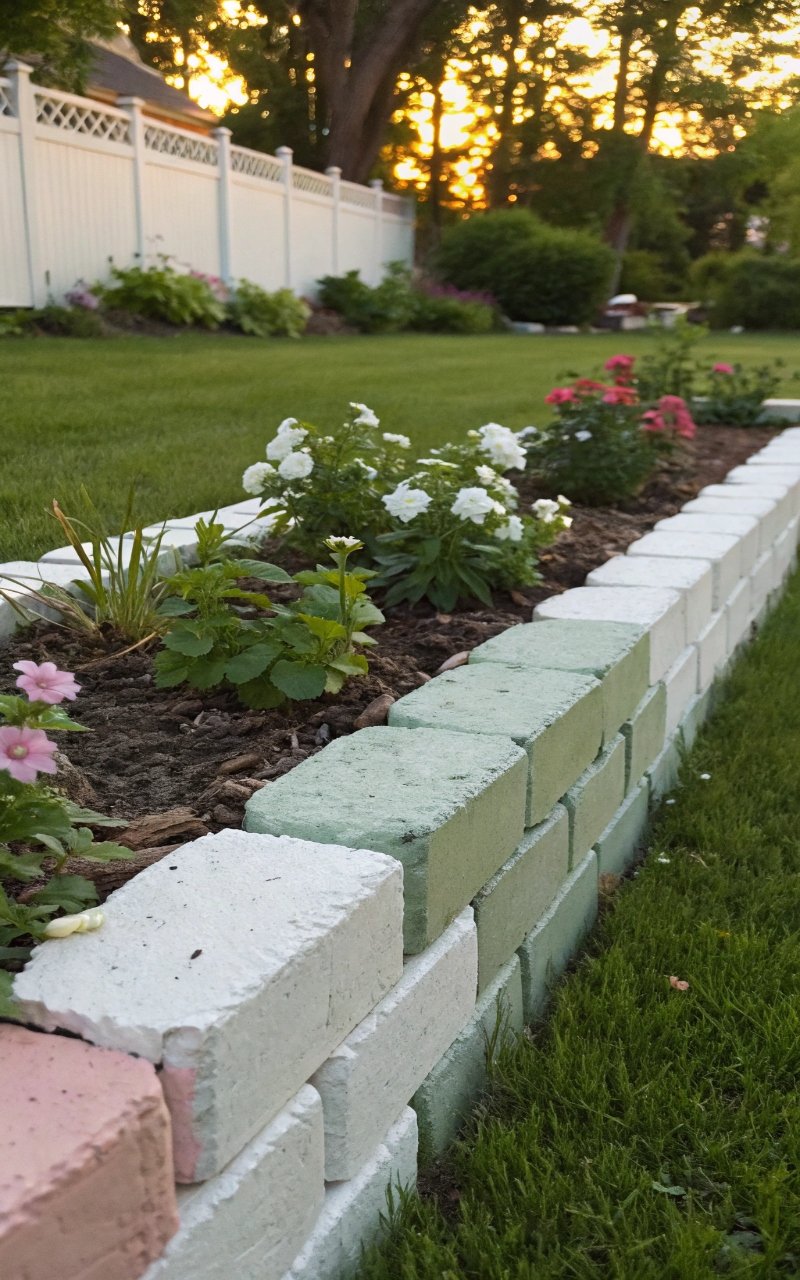
I once took a pile of old bricks that looked a little too worn and decided to give them a fresh coat of paint, and wow, the difference felt immediate and kind of addictive to look at. Bright whites, soft pastels, or even muted earthy tones can turn something basic into a standout feature that frames your plants beautifully. The contrast between the painted surface and the greenery creates a crisp, intentional edge that feels both playful and polished. It’s one of those projects where you step back and think, “Wait, why didn’t I do this sooner?” because it instantly lifts the whole space. Would you go bold with color or keep it subtle and chic? Pro Tip: Use weatherproof outdoor paint to keep the colors vibrant through rain and sun.
2. Vertical Wood Slice Edging
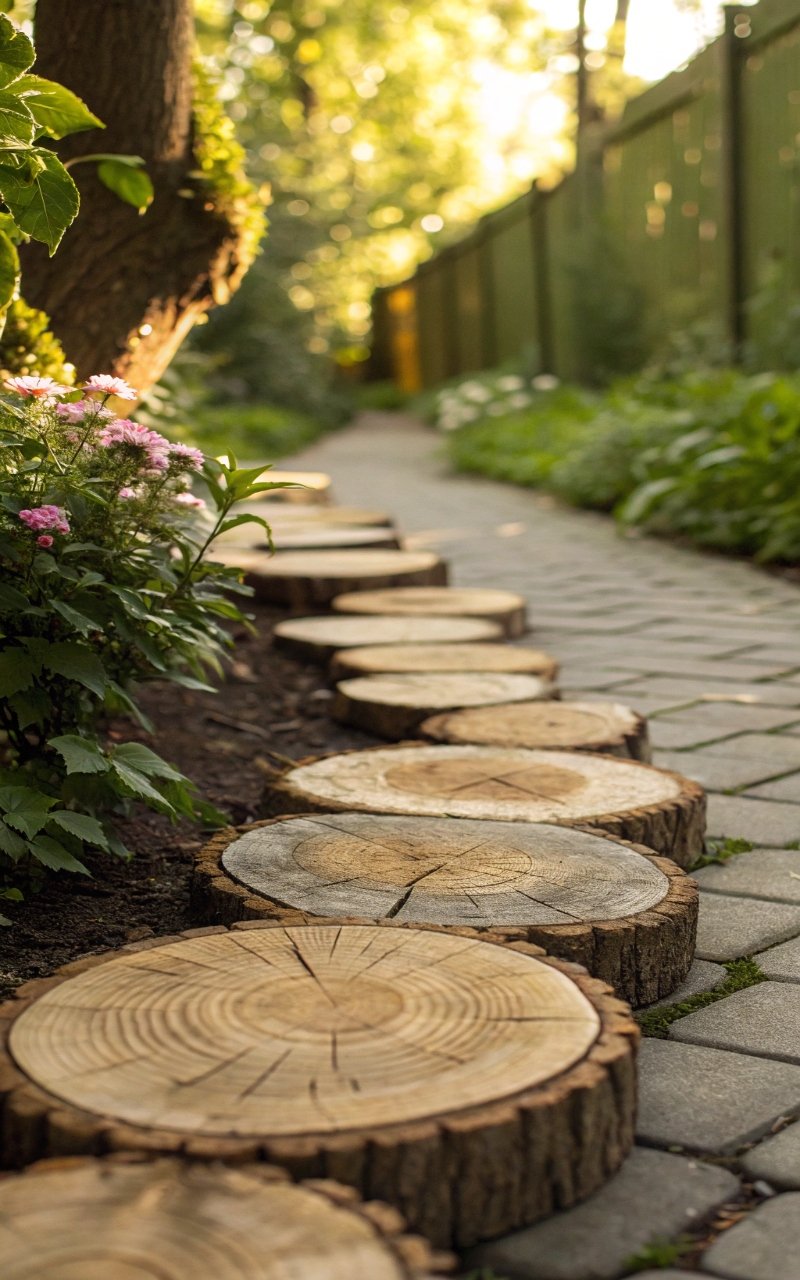
Cutting logs into round slices and placing them vertically along a garden edge gives off this cozy, woodland vibe that feels straight out of a nature retreat. Each slice shows its own rings and texture, adding layers of visual interest that feel organic and calming. The uneven heights create a rhythm that keeps your eye moving, making the border feel dynamic instead of flat. It’s a simple idea, but it hits different when sunlight filters through and highlights those natural patterns. Doesn’t it feel good when something this natural looks so thoughtfully designed? Pro Tip: Treat the wood with sealant to prevent rotting and extend its lifespan.
3. Stacked Stone Borders for Depth
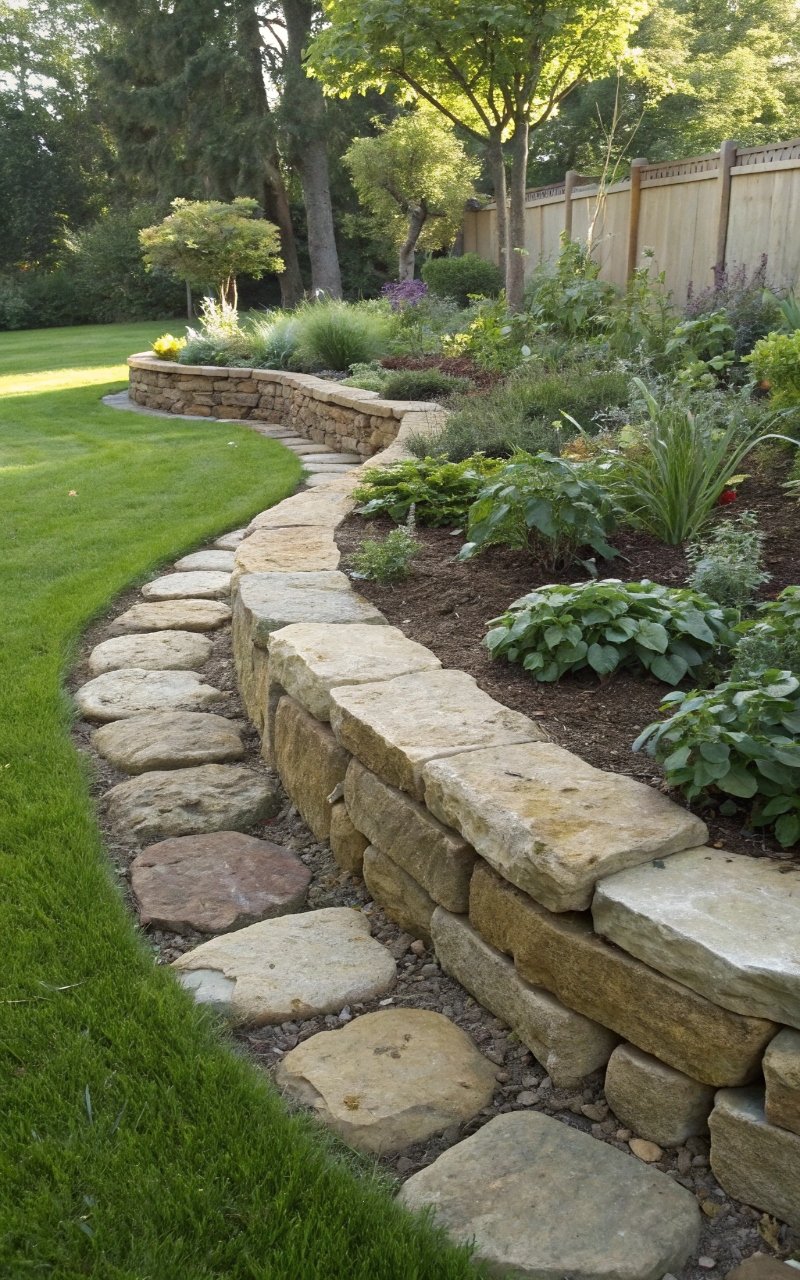
Stacking stones instead of laying them flat adds height and dimension, making your garden feel more structured without looking too formal. The layers create shadows and depth, which makes the border visually richer and more interesting from every angle. It feels sturdy, timeless, and surprisingly easy to achieve with materials you might already have. There’s something satisfying about placing each stone and watching the design slowly take shape. It’s like building a mini landscape feature with your own hands. Pro Tip: Start with larger stones at the base for better stability.
4. DIY Concrete Mold Edging
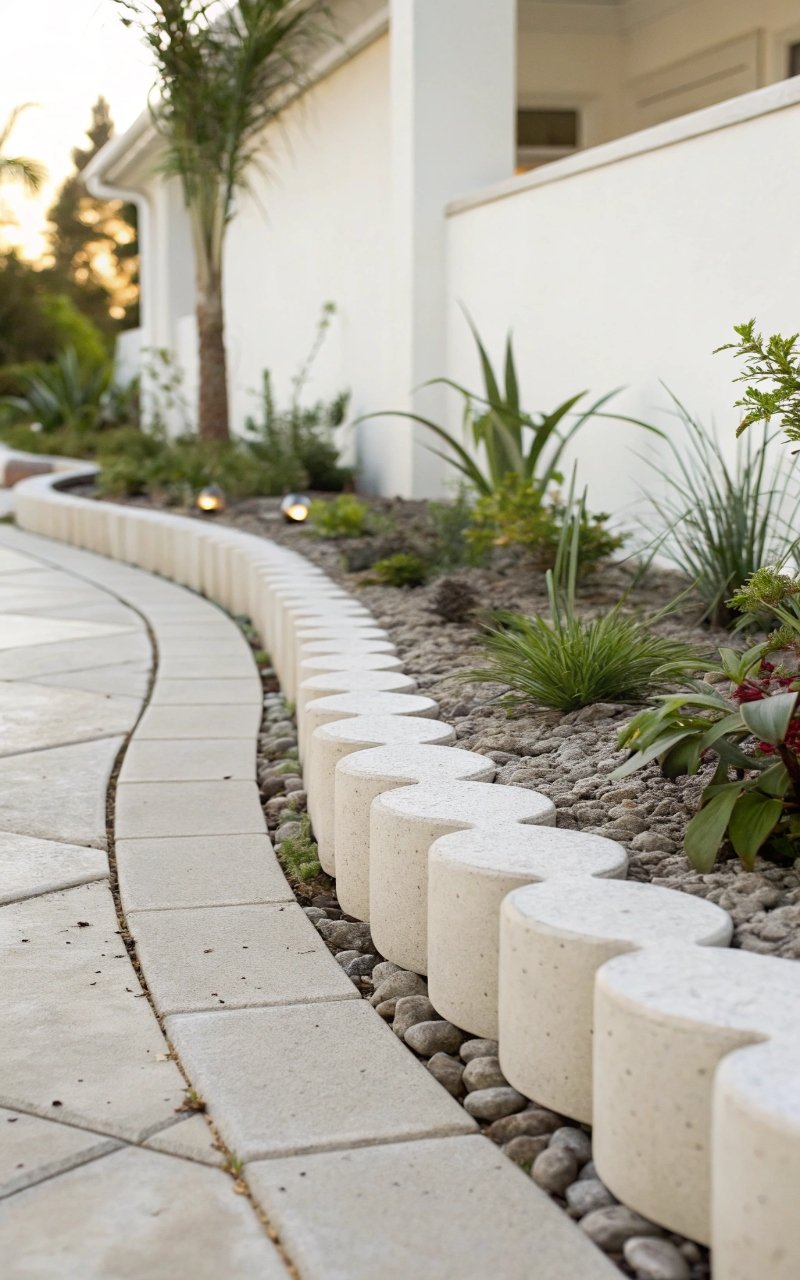
I tried making my own concrete molds once, and while it sounded intimidating at first, it turned out to be way easier than expected and honestly kind of fun. You can shape them into curves, patterns, or simple blocks depending on your style, which gives you full control over the design. Once they set, they create a clean, modern border that looks way more expensive than it actually is. It’s a great option if you want something durable that still feels custom. Would you go sleek and minimal or experiment with textured patterns? Pro Tip: Use reusable molds so you can create matching pieces easily.
5. Rope and Post Border Combo
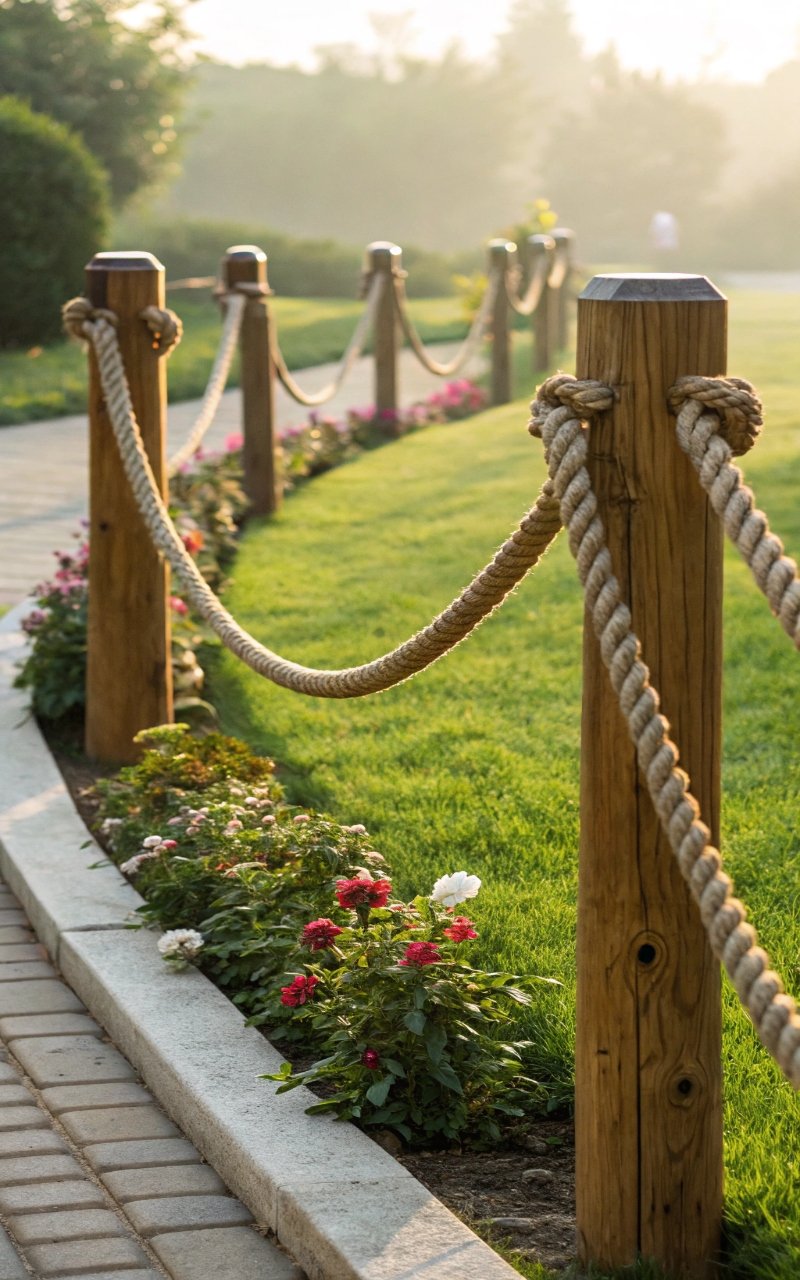
Combining wooden posts with thick rope creates a border that feels relaxed, slightly nautical, and totally inviting without trying too hard. The rope drapes naturally between posts, softening the look while still defining the space clearly. It adds texture and movement, especially when there’s a light breeze, which makes the garden feel more alive. This setup works beautifully for pathways or separating sections without blocking the view. It’s simple, but it carries a vibe that’s hard to ignore. Pro Tip: Anchor posts firmly into the ground to keep the rope secure and evenly spaced.
6. Reclaimed Tile Mosaic Edge
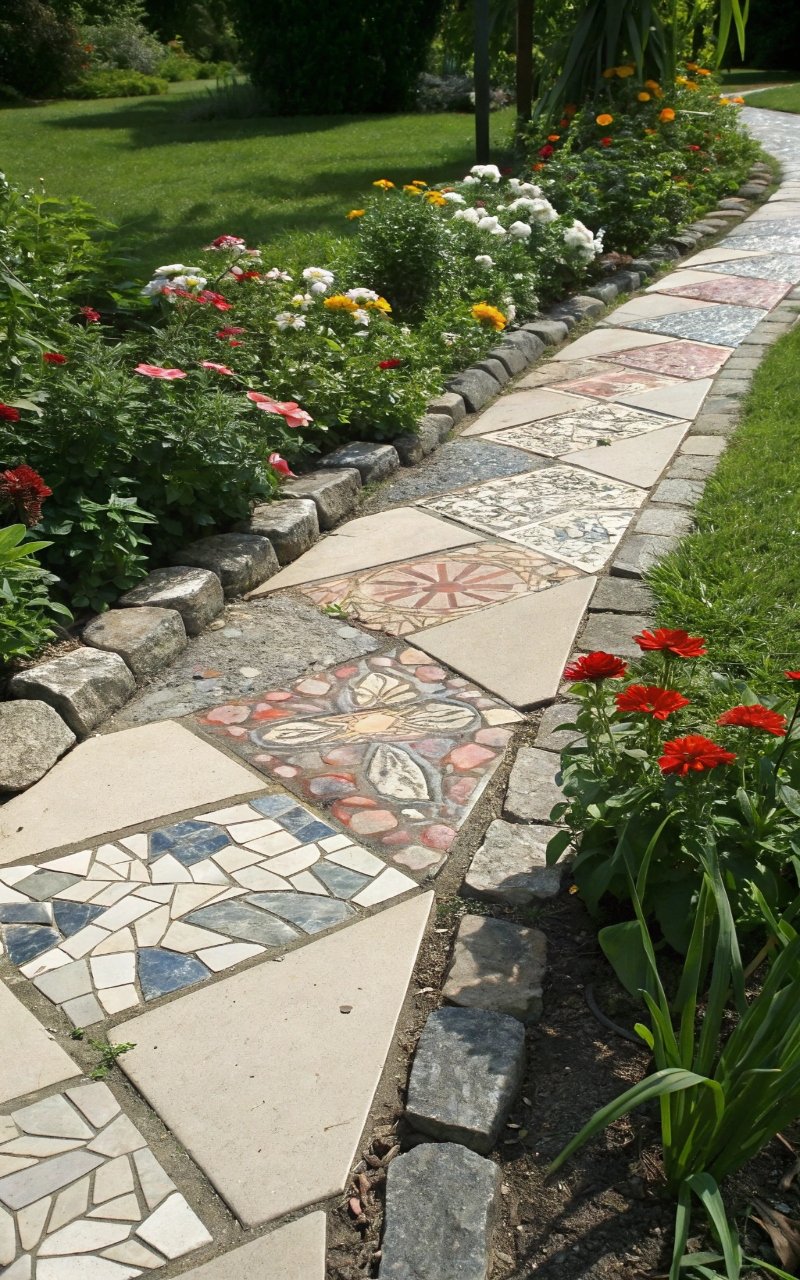
Using broken or leftover tiles to create a mosaic border feels like turning scraps into something genuinely artistic and personal. The mix of colors, patterns, and textures creates a one-of-a-kind design that reflects your style in a really creative way. When sunlight hits the tiles, it adds a subtle shimmer that brings the border to life. It’s a bit of a puzzle to assemble, but that’s part of the fun, right? You end up with something that feels completely unique. Pro Tip: Use grout and sealant to keep the tiles securely in place and weather-resistant.
7. Metal Sheet Edging with a Modern Twist
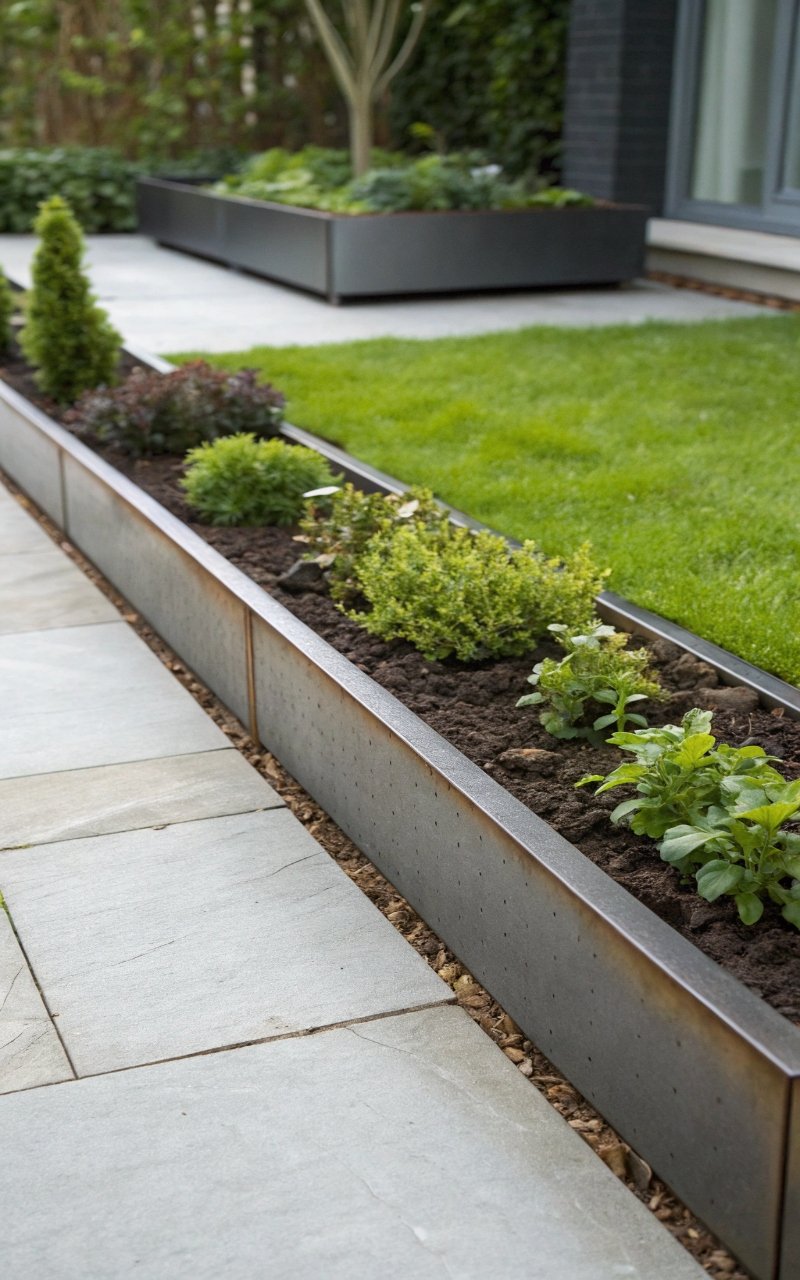
Thin metal sheets can create a sleek, contemporary border that contrasts beautifully with the softness of plants and soil. The clean lines give your garden a structured look without overwhelming the natural elements. Over time, some metals develop a patina that adds character and depth, making the border even more interesting. It’s a minimalist approach that still feels bold in its own quiet way. Doesn’t a sharp edge just make everything look more intentional? Pro Tip: Wear gloves during installation to avoid sharp edges.
8. Bamboo Roll Borders for Easy Installation
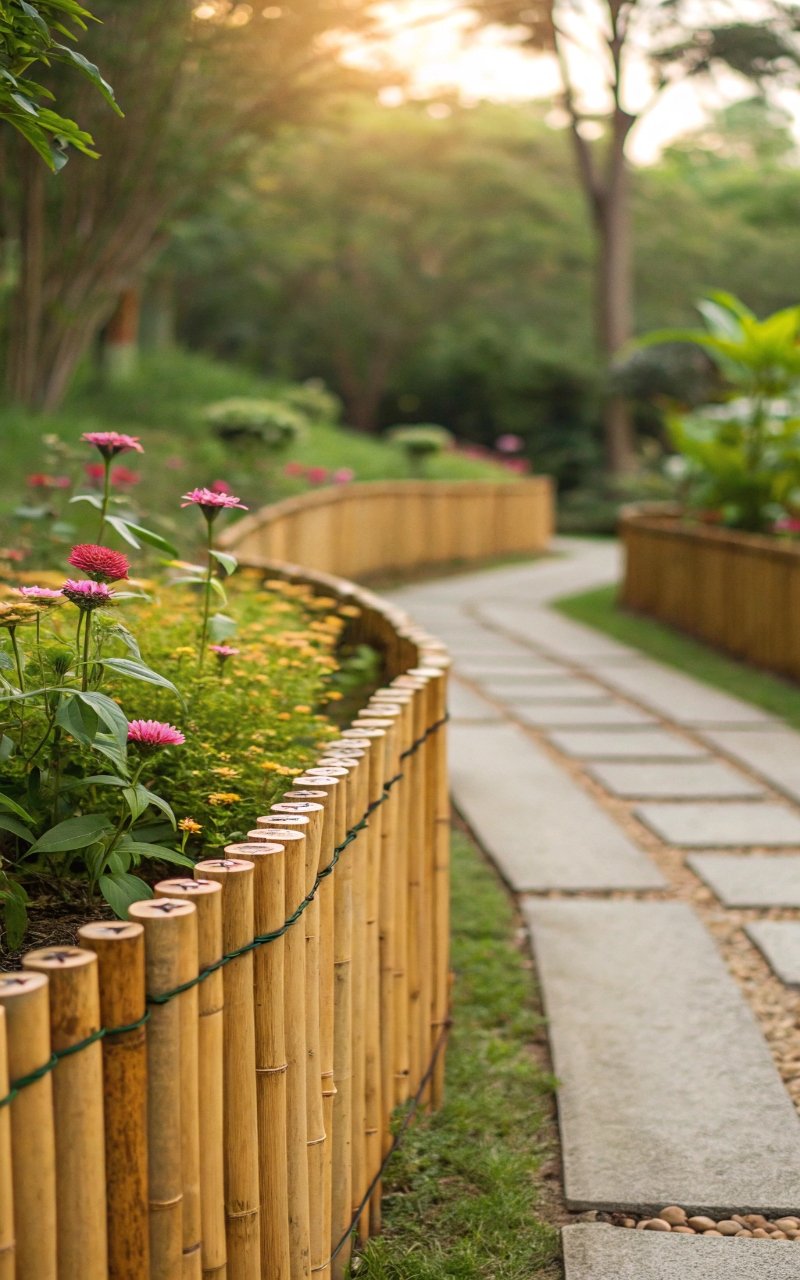
Bamboo rolls are one of those surprisingly easy solutions that instantly add a calm, natural feel to your garden without much effort. The vertical lines create a gentle pattern that feels balanced and soothing, almost like a mini escape right in your yard. It’s lightweight, flexible, and easy to shape around curves, which makes it perfect for DIY projects. The warm tones blend seamlessly with greenery, creating a cohesive look. It’s simple, but it works so well. Pro Tip: Secure bamboo with hidden stakes for a clean finish.
9. Glass Bottle Glow Borders
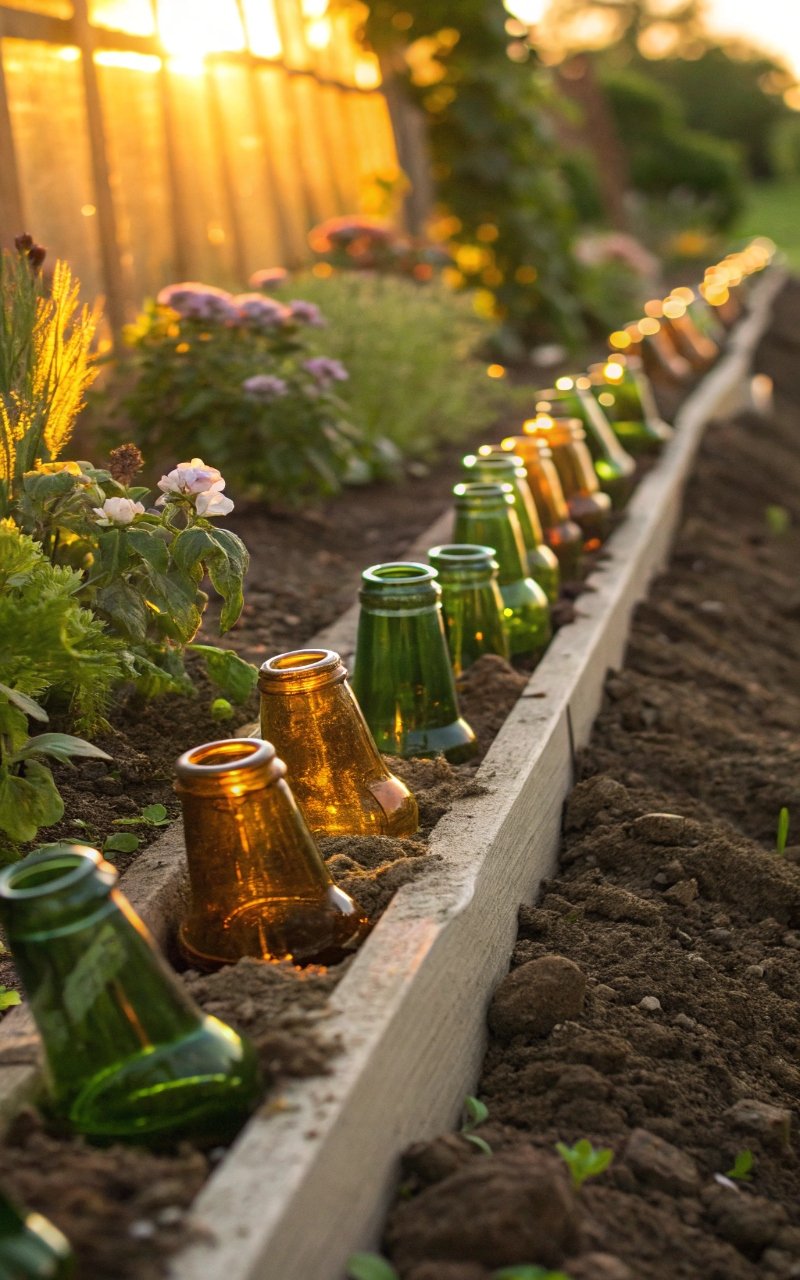
Lining up glass bottles along your garden edge creates a border that catches light in the most beautiful way, especially during golden hour. The colors reflect softly, adding a glow that feels almost magical without being over the top. It’s a creative way to reuse materials while adding personality to your space. The uniform shapes create order, while the colors bring in that playful twist. It’s a little quirky, but in a really cool way. Pro Tip: Bury bottles deep enough to keep them stable and evenly aligned.
10. Pallet Wood Zigzag Design
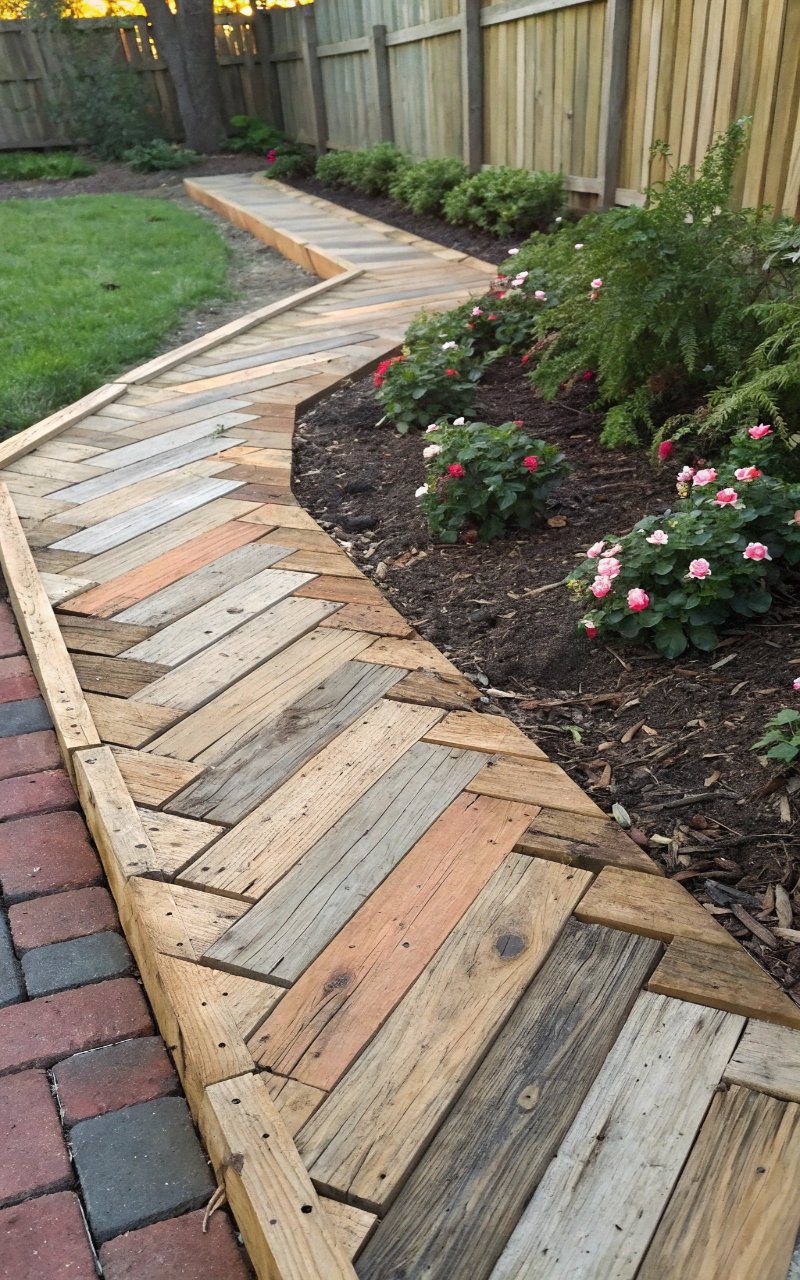
Breaking down pallet wood and arranging it in a zigzag pattern adds movement and energy to your garden border. The angled lines draw the eye and create a dynamic look that feels more playful than straight edges. It’s a great way to use reclaimed materials while adding a design element that stands out. Each piece tells its own story, which adds to the charm. Honestly, it’s such a vibe when everything comes together. Pro Tip: Sand and seal the wood to protect it from weather damage.
11. Gravel and Brick Combo Border
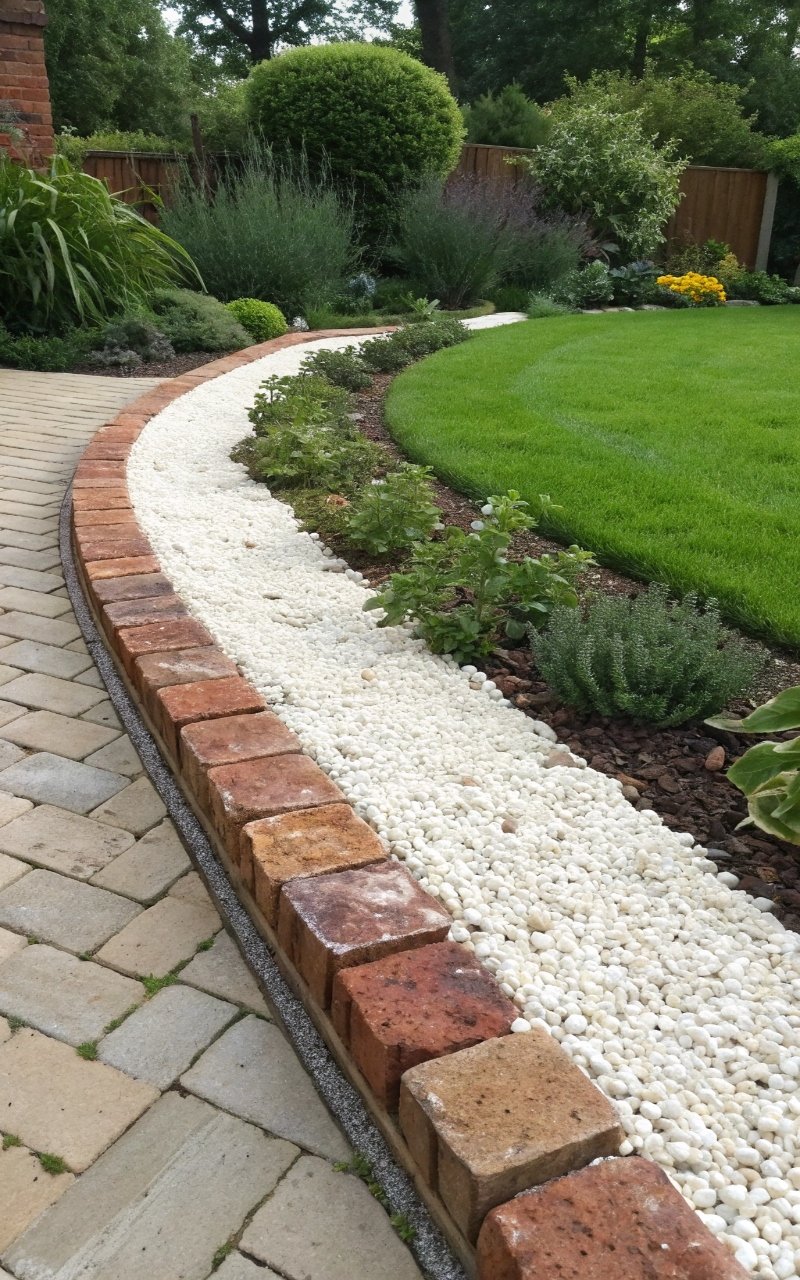
Combining gravel with bricks creates a layered border that feels both structured and relaxed at the same time. The bricks provide a solid edge, while the gravel softens the look and adds texture. It also improves drainage, which is a practical bonus you’ll appreciate over time. The contrast between materials keeps things visually interesting without feeling cluttered. It’s a balanced design that works in almost any garden. Pro Tip: Use landscape fabric under gravel to keep weeds away.
12. Upcycled Tin Can Edging
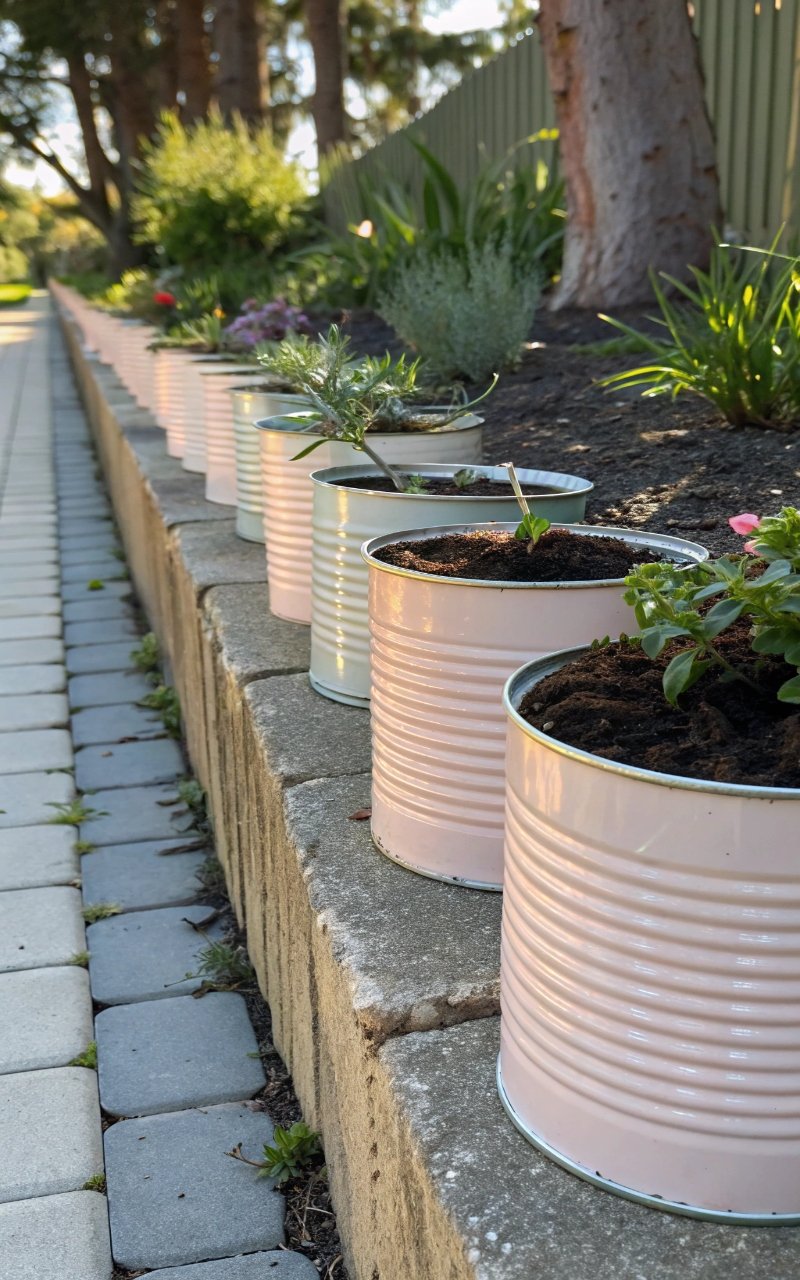
Using tin cans as a garden border might sound unexpected, but once arranged and painted, they create a surprisingly charming and cohesive edge. The cylindrical shapes add rhythm, and the metallic surface reflects light in subtle ways. It’s a creative, eco-friendly option that turns everyday items into something decorative. You can customize the colors to match your garden’s theme, which makes it feel intentional. It’s quirky, but it totally works. Pro Tip: Drill small drainage holes in the cans if you plan to plant inside them.
13. Living Herb Borders
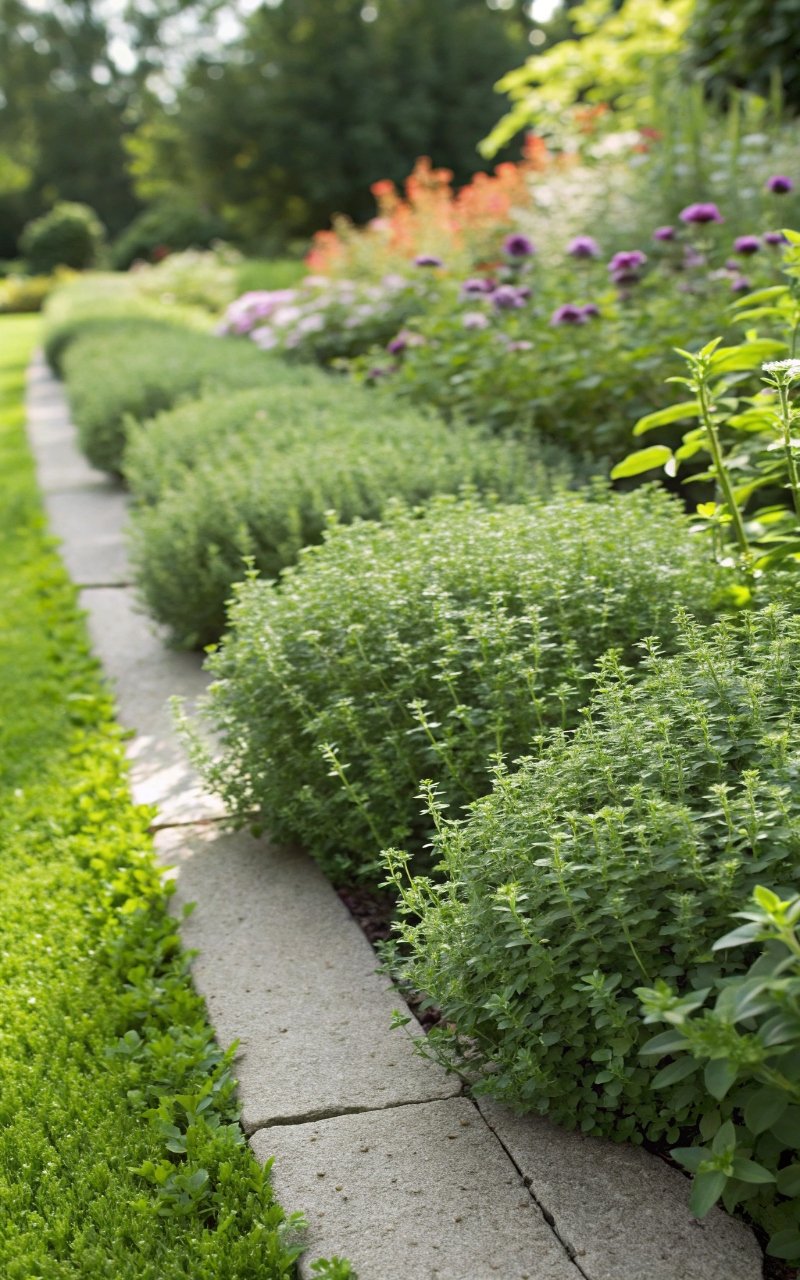
Planting herbs along your garden edge creates a border that looks beautiful and smells amazing at the same time. As you brush past them, the scent adds a sensory layer that makes the space feel alive and welcoming. It’s functional too, since you can harvest fresh herbs whenever you need them. The greenery softens the border while still defining the space clearly. Isn’t it nice when something looks good and serves a purpose? Pro Tip: Choose hardy herbs like thyme or oregano for easy maintenance.
14. Railroad Tie Edging for Bold Structure
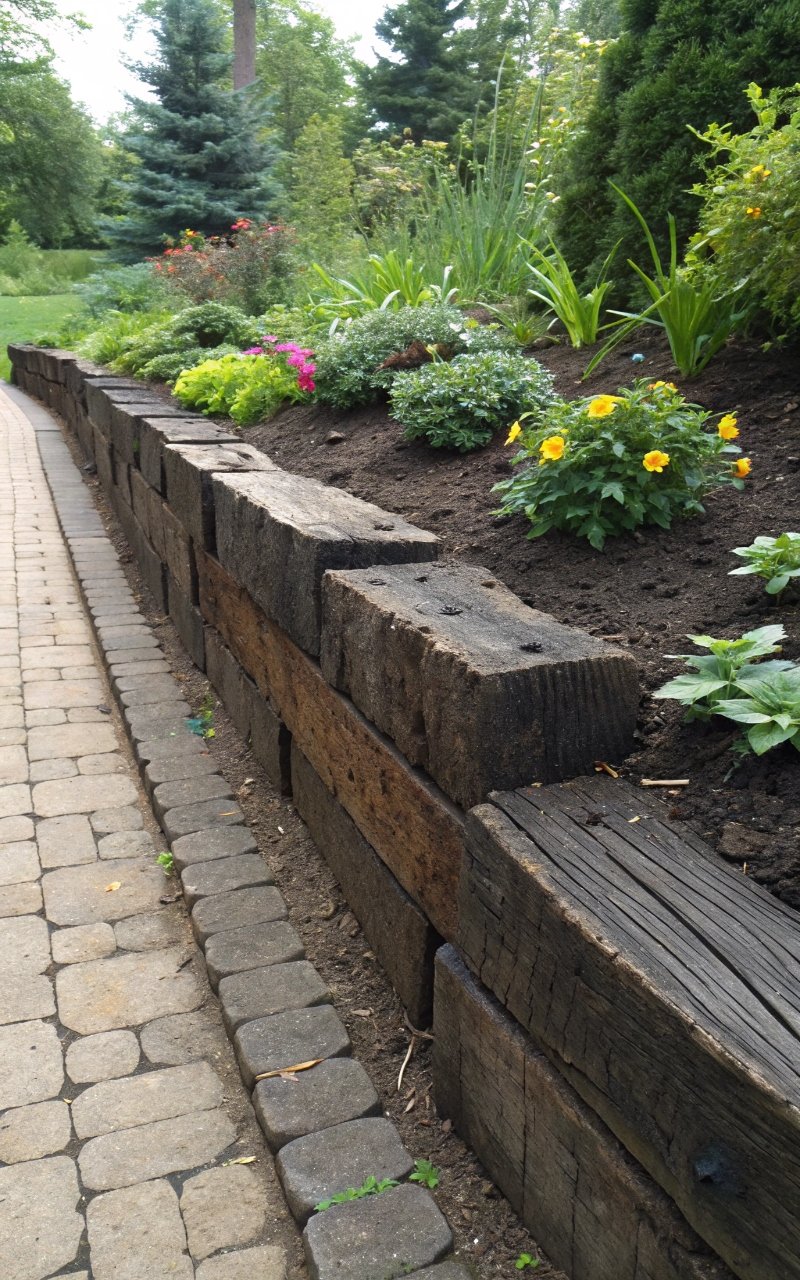
Using old railroad ties creates a bold, sturdy border that instantly anchors your garden design. The thick wood adds weight and presence, making the space feel more grounded and defined. It’s perfect if you want a border that stands out while still blending with natural elements. The texture and color give off a rustic, slightly rugged vibe that feels timeless. It’s strong, simple, and seriously effective. Pro Tip: Make sure ties are properly treated to resist decay and pests.
15. Curved Trench Edging for a Soft Look
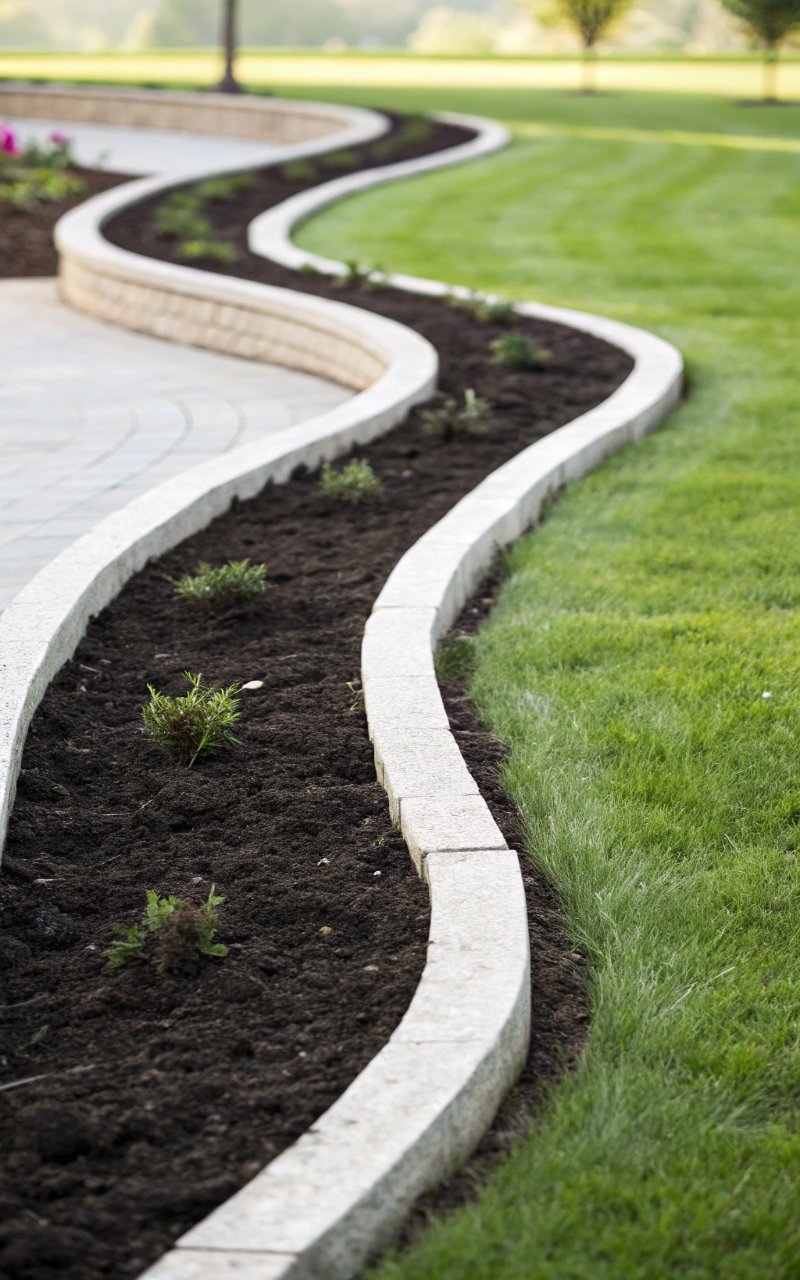
Digging a curved trench as a border might be one of the simplest ideas, but it creates a soft, flowing edge that feels incredibly natural and elegant. The gentle curves guide the eye and make the garden feel more dynamic without adding any materials. It’s subtle, but it transforms the space in a way that feels effortless. Sometimes the simplest solutions really do hit the hardest. Why overcomplicate something that already works beautifully? Pro Tip: Use a garden hose to map out curves before digging for a smoother design.
Conclusion
Upgrading your garden doesn’t have to mean expensive materials or complicated plans that take weeks to figure out. These DIY border ideas prove that creativity and a little effort can completely shift how your space looks and feels. Each border adds structure, personality, and a sense of intention that makes everything else in your garden stand out more. As you try different styles, you’ll start to notice what resonates with your space and your taste. That process becomes part of the joy, not just the result.
The beauty of these ideas lies in their flexibility, giving you room to experiment without worrying about getting everything perfect on the first try. You can mix materials, adjust layouts, and refine your design as your garden grows and changes over time. Those small, thoughtful touches add up, creating a space that feels both curated and comfortable. It’s not about following trends—it’s about building something that feels right for you. And honestly, that’s what makes a garden truly amazing. Before you know it, your garden won’t just look better—it’ll feel more like home.